
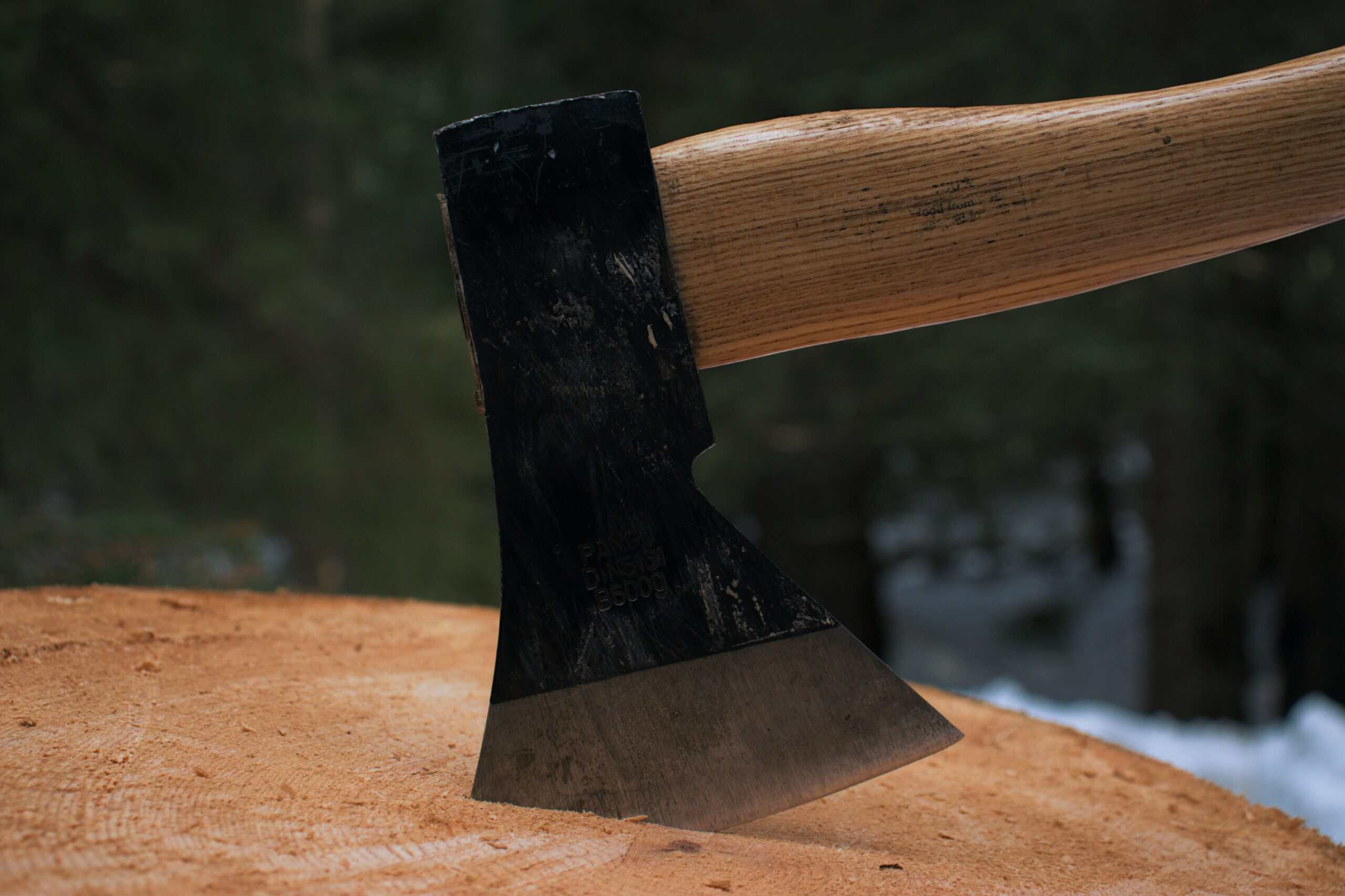
An axe does the heavy wood work a knife cannot, from limbing branches and splitting kindling to processing firewood at camp. For bushcraft, the trick is choosing a size you can carry that still swings with enough authority to be useful: a compact hatchet for the pack, or a longer forest axe for real chopping. The best bushcraft axes pair a quality head with a sound handle and a size matched to how far you carry it and what you cut. This guide sorts them by reach and weight. For the companion cutting tool, see our guide to survival and bushcraft knives.
Quick Verdict
For most bushcrafters, a mid-size forest hatchet like the Hults Bruk Almike or a Gransfors small forest axe is the versatile default: enough head weight and handle to process wood, still packable. Ultralight packers should look at a compact hatchet, base-camp users at a longer forest axe with more reach, and budget buyers at a solid value hatchet. Match the axe to how far you carry it and how much wood you process.
Key Takeaways
- A bushcraft axe processes wood a knife cannot, from limbing to splitting kindling.
- Compact hatchets pack light; longer forest axes give more chopping reach and power.
- A quality head and a sound, well-hung handle matter more than brand alone.
- A sharp axe is safer and more efficient than a dull one.
- Learn safe axe technique and carry a sheath for the head.
How We Picked the Best Bushcraft Axes
We looked for quality heads, sound handles, and sizes that balance carry weight against chopping ability, from compact hatchets to small forest axes. We favored well-regarded makers and axes that hold an edge.
We considered handle material, sheath inclusion, and grip. Every pick is a widely available line so you can match an axe to your kit and carry. Learn safe technique and use a sheath with any axe.
Hults Bruk Almike Hatchet
Why It Stands Out
The Hults Bruk Almike is a quality mid-size hatchet with a forged Swedish head and a hickory handle, balancing packable size with real chopping ability. It suits bushcrafters who want a refined, capable hatchet. Its head quality and balance are its strengths.
Worth Knowing
A premium forged hatchet costs more than value models. A mid-size hatchet is a compromise between weight and reach. It is the pick for a refined, versatile hatchet.
Best for bushcrafters wanting a quality, packable hatchet. Skip it if you want the cheapest or the longest axe.
Gransfors Bruk Small Forest Axe
Why It Stands Out
The Gransfors Bruk Small Forest Axe is a benchmark bushcraft axe, with a longer handle than a hatchet for more chopping power while staying packable. Its forged head and reputation make it a favorite for serious use. Reach and quality are its main draws.
Worth Knowing
It sits at a premium price and is longer and heavier than a compact hatchet. The extra reach rewards real wood processing. It is the pick for a quality small forest axe.
Best for bushcrafters wanting more reach and power. Skip it if you need the lightest, most compact option.
Fiskars X7 Hatchet
Why It Stands Out
The Fiskars X7 is a durable, value-priced hatchet with a composite handle that shrugs off overstrikes and needs no maintenance, making it a low-fuss workhorse. It suits users who want reliability without babying a wooden handle. Durability and value are its strengths.
Worth Knowing
A composite handle lacks the traditional feel some bushcrafters prefer. It is compact, favoring portability over reach. It is the pick for a low-maintenance value hatchet.
Best for users wanting a tough, low-fuss hatchet. Skip it if you want a traditional wooden handle or long reach.
Council Tool Hudson Bay Axe
Why It Stands Out
The Council Tool Hudson Bay axe offers a classic head profile on a hickory handle, giving a capable American-made bushcraft axe with good chopping ability. It suits users who want a traditional axe that works hard. The classic profile and build are its appeal.
Worth Knowing
A wooden-handled axe needs care to keep the head tight and the handle sound. It is larger than a compact hatchet. It is the pick for a traditional working axe.
Best for users wanting a classic, capable wooden-handled axe. Skip it if you want minimal maintenance or ultralight weight.
Compact Ultralight Bushcraft Hatchet
Why It Stands Out
A compact ultralight hatchet minimizes weight for backpackers who want an axe without the bulk, handling light limbing and kindling. It suits those who carry an axe far and cut only occasionally. Low weight is its main draw.
Worth Knowing
A small hatchet has less chopping power and reach, so it suits light tasks over heavy processing. It rewards good technique. It is the pick for ultralight carry.
Best for backpackers who want a light axe for light tasks. Skip it if you process a lot of wood at camp.
Longer Forest Axe for Base Camp
Why It Stands Out
A longer forest axe gives more reach and chopping power for base-camp wood processing, where you split and chop more and carry less far. The extra handle length multiplies each swing. Chopping power is its purpose.
Worth Knowing
A longer axe is heavier and less packable, meant for vehicle or base-camp use rather than deep hikes. It needs room to swing safely. It is the pick for heavy base-camp processing.
Best for base-camp users who process a lot of wood. Skip it if you hike in far and need to save weight.
How to Choose a Bushcraft Axe
Match Size to Your Carry
A compact hatchet packs light for deep hikes but has less power, while a longer forest axe chops harder but weighs more, so match the size to how far you carry it. Deep packers favor small; base campers favor large. Carry distance drives the size choice.
Head and Handle Quality
A quality forged head that holds an edge and a sound, well-hung handle matter more than brand alone, since a loose head or poor steel undercuts any axe. Look for a tight head and good steel. These fundamentals define a good axe.
Handle Material
Wooden handles offer a traditional feel and are replaceable but need care, while composite handles are low-maintenance and tough against overstrikes. Choose wood for feel and composite for durability. Both work for bushcraft.
Sharpness and Safety
A sharp axe is safer and more efficient than a dull one, and a sheath protects the edge and you in the pack. Our guides to ferro rods and camping tarps cover more of a bushcraft kit.
Using a Bushcraft Axe Safely
Clear Your Swing and Stance
Make sure nothing is in the path of the swing and use a stable stance and a chopping block, so a missed or glancing strike goes into wood or ground, not your leg. A clear, controlled swing is the core of axe safety. Never rush a chop.
Keep It Sharp and Sheathed
A sharp axe bites predictably rather than glancing off, and a sheath protects the edge and everyone near it in transit. Maintaining the edge and sheathing the head are basic safety habits. Care for the axe and it stays safe to use.
Common Bushcraft Axe Mistakes
Buying Too Big to Carry
A large axe left at home because it is too heavy helps no one. Match the axe size to how far you actually carry it.
Letting It Go Dull
A dull axe glances and works poorly, which is less safe and less efficient. Keep the edge sharp and sheathed.
Ignoring Handle Care
A loose head or cracked wooden handle is dangerous. Check the head is tight and the handle sound before use.
Recommended Reading
- Survival and bushcraft knives
- Ferro rods for fire starting
- Camping tarps for shelter
- Camp stoves for backpacking
- paracord for lashing and shelter
- a saw alongside the axe
- carrying tools comfortably
- kayaks and canoes
Frequently Asked Questions
What size axe is best for bushcraft?
A mid-size hatchet or small forest axe suits most bushcraft, balancing enough head weight and handle length to process wood with a size you can still carry. Ultralight packers favor a compact hatchet, while base-camp users can carry a longer forest axe for more power. Match the size to how far you carry it and how much wood you cut.
What is the difference between a hatchet and a forest axe?
A hatchet is shorter and lighter for one-handed use and packability, while a forest axe has a longer handle for more reach and chopping power, usually used two-handed. Hatchets suit light limbing and kindling; forest axes handle heavier processing. The choice depends on how much wood work you do versus how far you carry.
Are wooden or composite axe handles better?
Wooden handles offer a traditional feel and can be replaced if broken but need care to stay sound, while composite handles are low-maintenance and shrug off overstrikes. Choose wood for feel and repairability, and composite for toughness and minimal upkeep. Both perform well for bushcraft when the head quality is good.
Do I need an axe if I have a knife?
A knife handles fine cutting and carving, but an axe processes larger wood far more efficiently, from limbing to splitting kindling, so many bushcrafters carry both. If you only cut small material, a knife and a saw may suffice. For heavier wood processing, an axe earns its place in the kit.
How do I keep a bushcraft axe sharp?
Maintain the edge with a file and a sharpening stone or puck, working the bevel evenly, and touch it up before it goes dull. A sharp axe is safer and more efficient than a dull one. Storing it sheathed and dry also protects the edge between uses.
Is a bushcraft axe safe to carry backpacking?
Yes, with a sheath over the head and safe packing, an axe carries fine backpacking, and matching the size to your carry keeps the weight manageable. Learn safe chopping technique and always clear your swing path before use. A sheathed, well-maintained axe is a safe and useful part of a bushcraft kit.
