
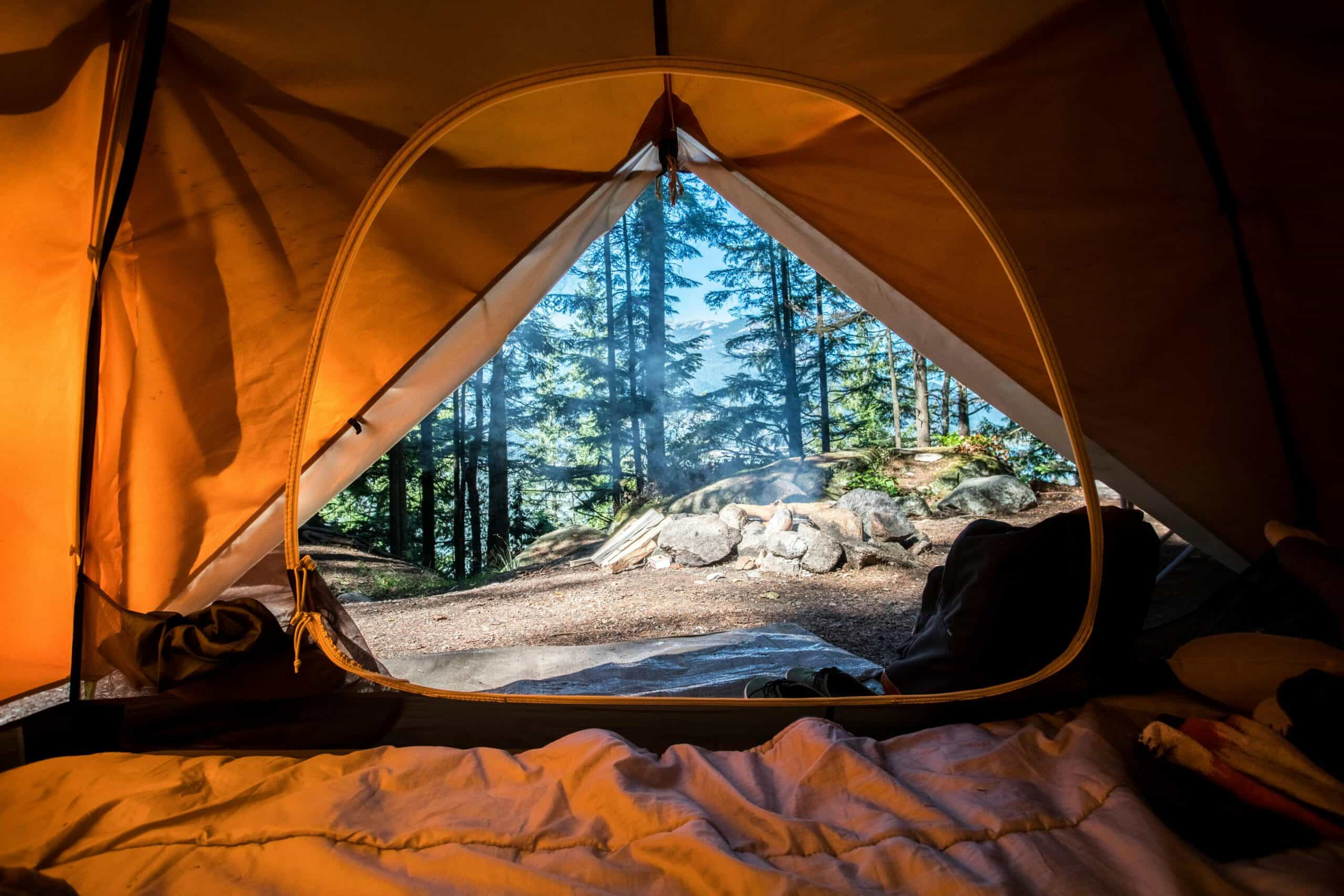
Most of the time the inside of your tent gets wet from condensation rather than a leak, because a sleeping person releases close to a pint of water vapor overnight and the tent wall is the coldest surface available. Why the inside of your tent gets wet comes down to one question you can answer in about thirty seconds: where exactly is the water sitting?
| What you see | Likely cause | First fix |
|---|---|---|
| Even film on inner walls | Condensation | Open more vents |
| Droplets on the ceiling | Condensation | Increase airflow, avoid touching |
| Wet patches under the sleeping pad | Ground moisture or condensation under floor | Add a groundsheet |
| Drips from one specific point | Leak at a seam or pinhole | Seam seal that spot |
| Wet where inner touches fly | Contact transfer | Tension guylines |
| Wet along the floor edge | Splashback or pooling | Move the pitch, adjust fly |
How Much Water Are You Actually Producing?
One adult breathing overnight puts out a substantial amount of moisture, and that figure rises with two people or a dog. Wet gear inside the tent adds more.
Air holds water while it is warm. As the tent cools overnight, the air inside reaches the point where it cannot hold that moisture, and the vapor condenses on the coldest surface it can find.
That surface is the tent wall. Nothing has failed when this happens, and it is the single most common reason people think a tent leaks.
How to Tell Condensation From a Leak
Location decides it. Condensation spreads evenly and appears everywhere the wall is cold, while a leak concentrates at one point and traces downward from it.
Timing helps too. Condensation appears overnight regardless of weather, and it is often worst on clear cold nights with no rain at all.
Touch the fabric. Condensation wipes away and leaves the fabric dry underneath, while a leaking seam keeps producing water when you press around it.
A clear night with a wet tent is condensation by definition. A leak needs rain to show itself.
What Makes Condensation Worse
Still air is the main factor. Without airflow, humid air sits against the fabric and keeps depositing moisture instead of carrying it out.
Pitching in a low spot compounds it. Cold air and moisture pool in dips and beside water, so a slight rise pitches drier than a hollow.
Cooking or boiling water inside is the fastest way to soak a tent. So is bringing wet boots and a damp jacket in with you.
Single wall tents suffer more by design. Double wall tents put a mesh inner between you and the condensing surface, which is why our roundup of two person backpacking tents favors that construction for most conditions.
How to Reduce It
Open every vent you have, even in rain. Most fly designs include vents specifically positioned to stay dry while moving air.
Leave the fly slightly off the ground rather than sealed to it. A gap of a few inches at the base drives airflow through the tent.
Pitch the fly taut. Slack fabric sags onto the inner tent, and any contact point transfers water straight through.
Store wet gear in the vestibule instead of beside you. Our roundup of camping tarps covers an outdoor option for genuinely soaked kit.
Face the door into any breeze. Cross ventilation moves far more moisture than a single open panel.
Why Guyline Tension Matters More Than People Think
A tent that looks pitched can still be sagging. Nylon flies stretch when wet, so a fly tensioned at dusk goes slack by midnight.
That slack lets the fly rest against the inner. Water then wicks across the contact patch, and it looks exactly like a leak in the ceiling.
Re-tension before sleeping if the fabric has taken on moisture. It takes a minute and it prevents the most common overnight surprise.
Good stakes make this achievable. Our roundup of tent stakes and guylines covers what holds tension in soft ground.
Where You Pitch Changes Everything
Site choice does more for condensation than any gear decision. Cold damp air settles, so the bottom of a valley collects both.
Move even slightly uphill and the difference is noticeable. A rise of a few feet puts you above the layer where moisture pools overnight.
Stay back from water. Lakes and streams keep the surrounding air near saturation, and a pitch fifty yards away behaves very differently from one on the bank.
Avoid dense vegetation and low hollows for the same reason. Plants release moisture and hedges block the airflow that would clear it.
Open ground with a breeze beats a sheltered pocket unless the wind is genuinely strong. Our guide on planning a hiking route covers scouting campsites before you arrive.
Wet Underneath Rather Than Above
Moisture under the sleeping pad is a different problem. Ground moisture passes through worn floor coatings, and condensation also forms under the floor where warm tent meets cold earth.
A groundsheet under the tent handles most of it. Cut it slightly smaller than the tent footprint so rain does not collect between the layers.
An insulated pad helps as well, because it reduces how much heat reaches the ground through you. Our roundup of lightweight sleeping pads covers insulation values.
Old floors sometimes fail outright. Water pressing through under body weight rather than beading points at a worn coating rather than condensation.
Dealing With a Wet Tent in the Morning
Wipe the inner walls before packing. A small towel removes most of the water in under a minute, and our roundup of hiking towels covers what packs small enough to carry for this.
Shake the fly out separately. Packing it wet against the inner soaks everything by the next stop.
Dry it fully at home before storage. A tent packed damp grows mildew within days, and mildew permanently damages the waterproof coating.
Hang it loosely rather than compressed. Coatings degrade faster under pressure in a stuff sack.
Worth reading next: our comparison of tent versus hammock camping if condensation keeps ruining your nights, our roundup of ultralight backpacking tents under $200 for double wall options on a budget, and our guide on staying dry hiking in the rain for the part of the day before camp.
Wet Tent Interiors FAQ
Why does the inside of my tent get wet when it has not rained?
Condensation. Your breath and body release water vapor overnight, the tent cools, and that vapor turns to liquid on the coldest surface available, which is the tent wall. Clear cold nights often produce the worst condensation because the fabric loses heat fastest under an open sky.
How do I know if my tent is leaking or just condensing?
Look at where the water sits. Condensation spreads evenly across the inner walls and ceiling and wipes away leaving dry fabric. A leak concentrates at one point, usually a seam or a small hole, and keeps producing water when you press around it during rain.
Should I open vents when it is raining?
Yes. Fly vents are designed to shed rain while moving air, and closing everything traps moisture that then condenses on the walls. Sealing a tent in rain almost always produces a wetter interior than leaving it ventilated.
Why is my sleeping bag wet at the foot?
The foot of a bag usually touches the tent wall, and any contact point transfers condensation directly into the insulation. Pull the bag away from the wall, tension the fly properly, and choose a pitch that keeps the inner clear of the fly.
Does a bigger tent condense less?
Somewhat, because more air volume means the humidity level rises more slowly. Ventilation matters more than size, though, and a well vented small tent stays drier than a sealed large one. Two people in any tent produce far more moisture than one.
Can I stop condensation completely?
No, and that is worth accepting. Any enclosed shelter with a person inside will produce some condensation in the right conditions. The goal is reducing it enough that it does not drip or soak your gear, rather than eliminating it.
Do single wall tents condense more?
Yes, noticeably. A single wall puts the condensing surface directly above you with nothing between, so moisture drips onto your gear. Double wall designs use a mesh inner that keeps you separated from the wet fly, which is why most general purpose tents use them.
How do I dry a tent if I am camping several nights?
Wipe the inner walls each morning, then take advantage of any dry break during the day. Hanging the fly over a line or draping it across bushes for twenty minutes at lunch removes most of the moisture, and packing damp fabric separately keeps it off your sleeping gear.
Our guide to how to clean a tent covers the mildew that follows packing a damp tent away.
