
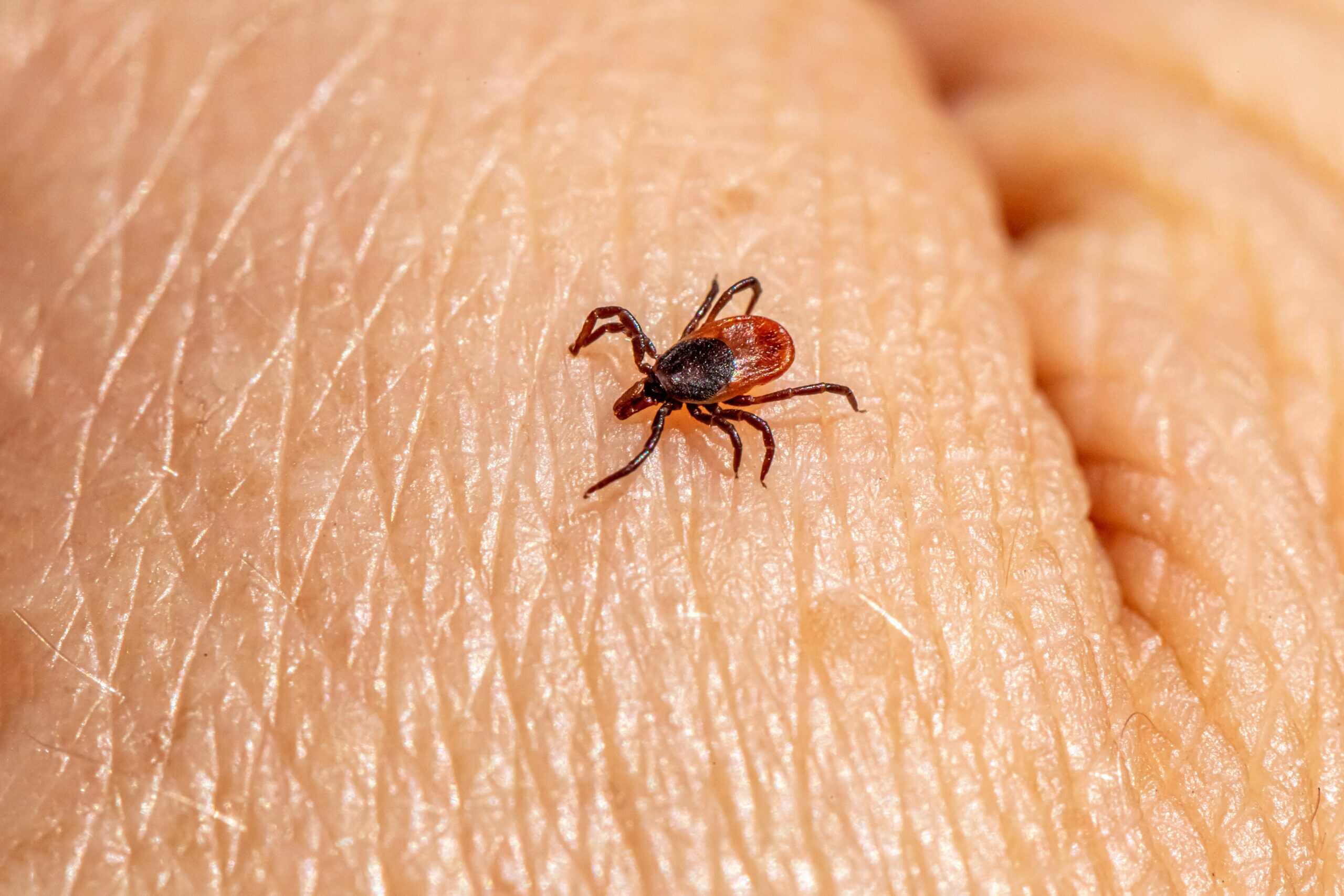
Check for ticks within a couple of hours of finishing, working over your whole body rather than only the parts that were exposed. Knowing how to check for ticks after a hike matters because attached ticks are easy to miss, and the youngest ones are roughly the size of a poppy seed. Our roundup of bug repellent for hiking covers the step that reduces how many reach you in the first place.
Medical Disclaimer
This describes standard public health guidance on tick checks and removal. It is not medical advice. Anyone who develops a rash, fever, aches or fatigue after a tick bite should contact a doctor, and anyone unsure about a bite should get it looked at rather than wait.
Quick Answer
Shower within two hours, then check your entire body with hands and a mirror. Pay particular attention to warm, folded areas: behind the knees, the groin, the waistband, armpits, the hairline and behind the ears. Put hiking clothes straight into a hot dryer for ten minutes, which kills ticks that fabric washing can miss.
Key Points
- Ticks favor warm folds rather than open skin.
- Nymphs are tiny and cause most human cases.
- A hot dryer cycle kills ticks on clothing.
- Remove attached ticks with fine tipped tweezers.
- Watch for rash or fever over the following weeks.
Where to Check First
| Area | Why ticks go there | How to check |
|---|---|---|
| Behind the knees | Warm, folded, hard to see | Mirror or by feel |
| Groin and waistband | Clothing edge stops them | By hand |
| Armpits | Warm and sheltered | By hand |
| Scalp and hairline | They climb upward | Fingers through hair |
| Behind and inside ears | Thin skin, easy to miss | Mirror |
| Navel | Warm and folded | Visual |
| Between toes and sock line | Contact point with vegetation | Visual |
The Centers for Disease Control and Prevention lists these same regions in its guidance on post exposure checks, and the pattern holds across species. Ticks climb until clothing or a skin fold stops them.
Why the Small Ones Matter Most
Adult ticks are visible and people find them. Nymphs are the problem, because they measure around a millimeter and read as a freckle or a speck of dirt.
Nymphs are also active through late spring and summer, which is peak hiking season. The CDC identifies this life stage as responsible for most tick borne disease transmission to people.
That size makes touch as useful as sight. Run fingers over skin and check anything that feels like a new bump rather than looking only for something dark.
Good light helps considerably. A headlamp works well for this, and our roundup of headlamps for hiking covers models with a close range setting.
What to Do With Your Clothes
Ticks survive a normal wash. Cold and warm water cycles do not reliably kill them, and they can crawl out of a hamper afterward.
Heat does work. Tumble drying on high for ten minutes kills ticks on dry clothing, and damp clothes need a full cycle first.
Do this before the clothes sit anywhere. Dropping a pack and a pair of trousers on a bedroom floor moves the problem indoors.
Check the pack itself too. Ticks ride on fabric and gear as readily as on skin, and our guide on cleaning a hiking backpack covers a proper wash for it.
How to Remove an Attached Tick
Use fine tipped tweezers and grasp as close to the skin as possible. Household tweezers are usually too blunt, which is why a set belongs in your kit.
Pull straight up with steady, even pressure. Twisting or jerking can break the mouthparts off and leave them in the skin.
Clean the area and your hands afterward with alcohol or soap and water. Mayo Clinic advises against folk removal methods such as heat, petroleum jelly or nail polish, since these can prompt the tick to remain attached longer.
Note the date. If symptoms appear later, knowing when the bite happened helps a doctor considerably.
Our roundup of hiking first aid kits covers kits that include a proper tick tool.
What to Watch for Afterward
Most bites cause nothing beyond a small red mark that fades within days. That reaction alone does not indicate infection.
Symptoms worth acting on appear over days to weeks. An expanding rash, fever, chills, headache, joint aches or unusual fatigue all warrant a call to a doctor.
Not every infection produces a rash. The CDC notes that the well known expanding rash appears in most Lyme cases but not all, so its absence does not rule anything out.
Mention the hike specifically when you call. Location and timing change what a clinician considers.
How to Get Fewer Ticks on You
Walk in the middle of the trail. Ticks wait on vegetation at the edges and transfer on contact rather than dropping from above.
Treat clothing rather than only skin. Permethrin treated fabric kills ticks on contact and survives several washes, while repellents on skin discourage rather than kill.
Tuck trousers into socks. It looks awkward and it removes the gap ticks use, and our roundup of hiking gaiters covers a tidier version of the same idea.
Light colored fabric makes them visible before they reach skin. Our roundup of hiking pants covers options that work with tucking.
Checking Kids and Dogs
Children need someone else to check them properly, especially the scalp and hairline. They also spend more time sitting on ground and logs.
Make it routine rather than an event. Our guide on hiking with kids covers folding this into the end of a walk.
Dogs carry ticks indoors and get bitten themselves. Run hands through the coat, checking ears, between toes, under the collar and around the tail.
Veterinary preventatives handle most of this. A vet can advise on what suits your region and your dog.
Related Reading
Tick Checks After Hiking FAQ
How do you check for ticks after a hike?
Shower within about two hours, then examine your whole body using hands and a mirror. Concentrate on warm folded areas: behind the knees, the groin, the waistband, armpits, the navel, the hairline and behind the ears. Use touch as well as sight, since nymphs are roughly the size of a poppy seed.
How long can a tick be attached before it matters?
Transmission risk generally rises with attachment time, which is why prompt checks help. Public health guidance emphasizes finding and removing ticks quickly rather than assuming any particular window is safe. Remove any tick you find immediately and note the date.
What is the correct way to remove a tick?
Grasp it with fine tipped tweezers as close to the skin as you can, then pull straight upward with steady pressure. Avoid twisting, which can break off mouthparts. Clean the bite and your hands afterward, and skip folk methods like heat or petroleum jelly.
Does showering remove ticks?
It removes unattached ones and gives you the chance to find attached ones early, which is why it is recommended within two hours of coming indoors. It does not remove a tick that has already attached, so a hands on check still matters.
Will washing my clothes kill ticks?
Not reliably. Ticks survive ordinary wash cycles, so heat is the effective step. Tumble drying on high for about ten minutes kills them on dry clothing. Clothes that are damp need a full drying cycle before that ten minutes counts.
What should I do if the head stays in the skin?
Try to remove it with clean tweezers, and if it will not come out easily, leave it and let the skin heal. Clean the area and watch it. Contact a doctor if the site becomes increasingly red, painful or swollen over the following days.
Do I need to save the tick?
It is not required, though some people keep it in a sealed bag with the date noted. Identification can help a clinician, since species and region affect which illnesses are plausible. Testing an individual tick is not generally used to guide treatment.
When should I see a doctor after a tick bite?
Contact a doctor if you develop a rash, fever, chills, headache, muscle or joint aches, or unusual fatigue in the days and weeks after a bite. Also go if you cannot remove the tick, if the bite site worsens, or if you are simply unsure. Mention when and where the hike happened.
Sources
- Centers for Disease Control and Prevention, guidance on preventing tick bites and checking for ticks after outdoor activity.
- Centers for Disease Control and Prevention, information on tick removal and signs of tick borne illness.
- Mayo Clinic, guidance on tick bite care and when to seek medical attention.
