
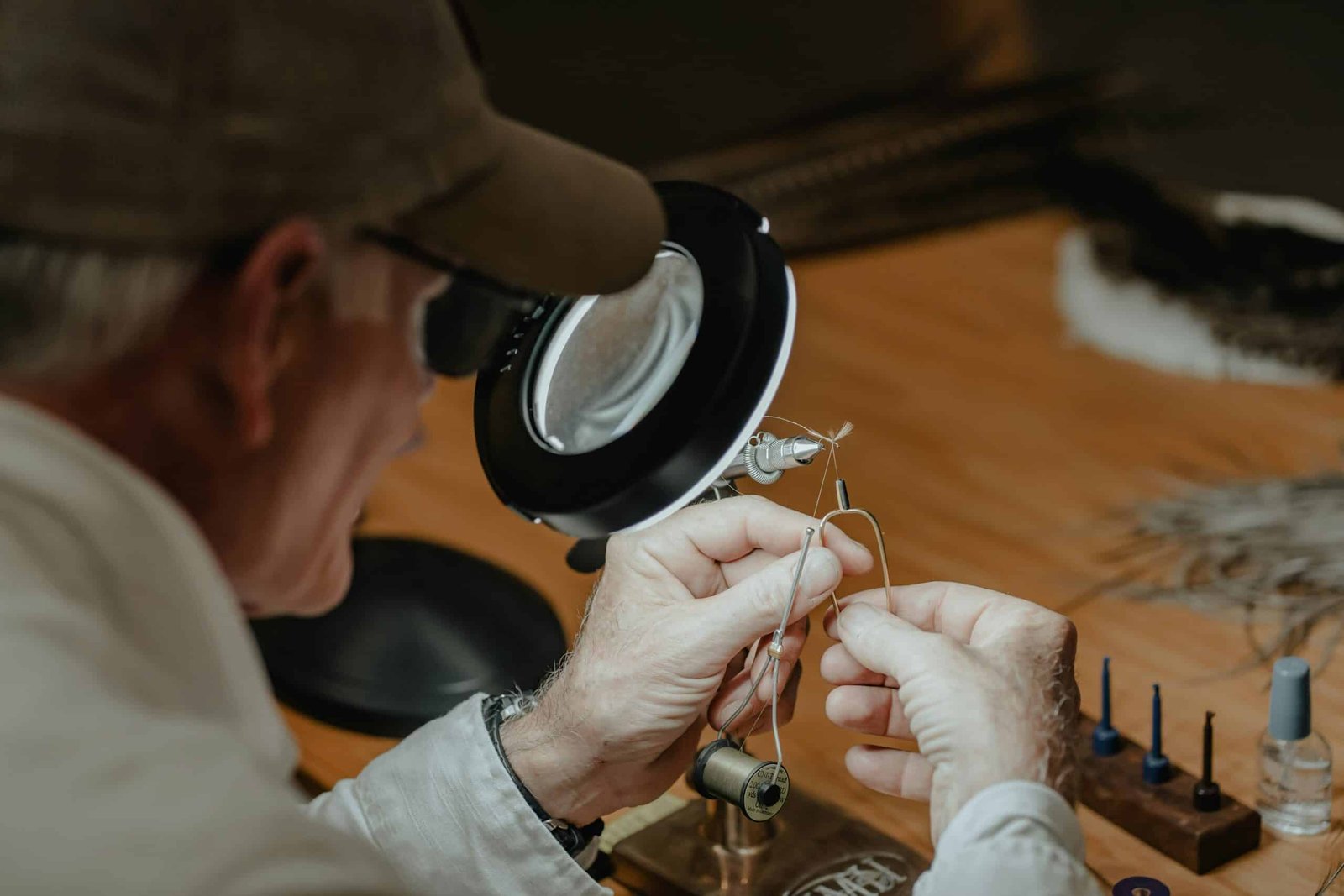
The best fly tying kits and vises are the ones that leave you with hardware worth keeping after the bundled materials run out. Almost every all-in-one starter kit includes a vise, and the vise is the part that decides whether tying stays enjoyable.
Our recommendation for most people starting out is a complete beginner kit, because having everything in one box removes the guesswork about what a bobbin or a whip finisher even is. Anyone who already borrows a friend’s bench should skip straight to a true rotary vise and buy tools individually, since that is where the lasting value sits. Materials are the one category where buying cheap and often beats buying well.
What tying is not is a way to save money. People tie because they want the fly they could not buy, and because a trout taking something you made is a different feeling.
| Item | Buy Once | Consumable | Priority |
|---|---|---|---|
| Complete beginner kit | Partly | Materials inside | Starting point |
| Rotary vise | Yes | No | First upgrade |
| Tool set | Mostly | Scissors dull | Essential |
| Materials assortment | No | Yes | Ongoing |
| Hook assortment | No | Yes | Ongoing |
| Bench organizer | Yes | No | Later |
How We Picked
We sorted by what survives the first year. Vises, scissors and a bobbin stay on the bench, while the feathers and thread in a starter kit are gone within a few dozen flies.
Then we weighted hook jaw range, because a vise that only holds mid-size hooks rules out both tiny dries and heavy streamers before you have decided what you like tying.
We have not tied on these vises or cut with these scissors, so nothing here reports on tool quality we handled. Material quality in kits varies batch to batch, which is part of why we treat it as consumable.
1. A Complete Beginner Kit, Best Starting Point
Why It Stands Out
One box with a vise, tools, thread, hooks and materials means you can tie a fly the evening it arrives. That matters more than component quality at the start, because the thing that stops most beginners is not knowing what is missing.
Kits also teach you the names of the tools by making you use them.
Worth Knowing
The vise in a budget kit is usually the weakest piece and the first thing you will want to replace. Scissors in these sets are often blunt enough to chew thread rather than cut it.
Match the kit to the water you fish, since a trout-oriented set is not much use for bass. Our roundup of trout fishing lures shows what those patterns imitate.
This suits anyone who has never tied a fly. Skip it if you already own a vise. Best for: tying your first fly without a shopping list.
2. A True Rotary Vise, Best Overall Investment
Why It Stands Out
A true rotary spins the hook on its own axis, so wrapping dubbing, wire and hackle becomes a steady turn instead of a hand-over-hand fight. It is the one purchase that makes tying feel less fiddly straight away.
A good one also holds everything from a tiny midge hook to a heavy streamer without changing jaws.
Worth Knowing
Plenty of vises advertise rotary action while only rotating the whole head, which is not the same thing. Look for true rotary in the description and a hook held on the axis of rotation.
Clamp or pedestal is a real choice too, since a clamp needs a suitable table edge and a pedestal does not.
This suits anyone who intends to keep tying. Skip it if you are still unsure you enjoy it. Best for: the piece of kit you will still use in ten years.
3. A Separate Tool Set, Best Quality Upgrade
Why It Stands Out
Sharp fine-tipped scissors, a smooth ceramic bobbin and a decent whip finisher remove most of the frustration a beginner blames on their own hands. Thread snapping at the bobbin tube is a tool problem rather than a technique problem.
These are cheap relative to the vise and make a bigger difference per dollar.
Worth Knowing
Big bundled tool sets include several items you will never pick up. Buying scissors, bobbin, bodkin, hackle pliers and a whip finisher individually usually costs less for better pieces.
Keep separate scissors for wire and synthetics, or you will ruin the good pair.
This suits anyone fighting their tools. Skip the large multi-tool bundles. Best for: the cheapest fix for tying that feels clumsy.
4. A Materials Assortment, Best Variety
Why It Stands Out
A mixed pack of dubbing, hackle, tinsel, chenille and marabou covers a wide span of patterns for very little money. At the start, variety teaches you more than quality does, because you discover which materials you like handling.
It is also the only sensible way to tie something new without ordering four packets first.
Worth Knowing
Assortment quality is uneven, and the hackle in a cheap pack is often too soft for dry flies. Buy good hackle separately once you know you want dries.
Natural materials need storing dry and away from moths, which is a real risk in a garage.
This suits early experimenting and general tying. Skip it if you tie one pattern seriously. Best for: trying many patterns cheaply.
5. A Hook Assortment, Best Consumable
Why It Stands Out
Hooks are the foundation of every fly and the thing you run out of first. A mixed box covering dry, nymph and streamer shapes in several sizes lets you follow any pattern you find.
Buying in bulk also makes practice flies feel disposable, which is exactly the attitude that improves them.
Worth Knowing
Cheap hooks bend and dull, and losing a fish to a soft wire gape is a poor economy. Barbless and barbed matter where regulations apply, so check your water first.
Sizing conventions differ between makers, which catches people out mid-pattern.
This suits every tier at every level. Skip the very cheapest boxes. Best for: having the right hook for whatever you want to tie.
6. A Bench Organizer, Best Sanity Saver
Why It Stands Out
Tying generates small loose items at a remarkable rate, and a caddy with thread spool posts and tool slots keeps the bench usable. Being able to sit down and start beats clearing space every time.
Many include a waste bag hoop, which saves the floor from clipped hackle.
Worth Knowing
Large benches take over a table permanently, which is a problem if you tie at the kitchen counter. A compact caddy that lifts away is more realistic for most homes.
Off-season storage matters too, and storing fishing gear over winter covers keeping materials in good order.
This suits anyone tying regularly. Skip it if you tie twice a year. Best for: sitting down and tying without a tidy-up first.
What to Look For in Fly Tying Kits and Vises
True rotary action, stated plainly
A head that merely swivels lets you look at the other side of the fly, while true rotary lets you wrap by turning the handle. The second is the one that changes how you tie.
Jaw range across hook sizes
A vise that holds small dry hooks and heavy streamer hooks without a jaw swap covers whatever you end up tying. Narrow-range jaws force a second purchase.
Pedestal or clamp to suit your table
A clamp is rock solid on a suitable edge and useless on a thick or rounded one. A pedestal works anywhere and slides if you push against it hard.
Scissors you would use for anything else
Fine-tipped scissors that cut cleanly at the very point are the most used tool on the bench. Bundled pairs are usually the first thing experienced tiers replace, exactly as happens with fishing pliers and tools on the water.
Light on the hook, not on the room
Tying is close work on small objects, and overhead room lighting throws your own shadow onto the fly. An adjustable lamp beside the vise does more for your tying than any tool upgrade.
A plain background behind the vise helps too, since dark thread on a dark table is hard to follow. A sheet of white card costs nothing and sharpens everything up.
A Kit Against Buying Pieces Separately
A kit gets you tying tonight
Everything is in the box, nothing is missing, and the learning curve starts immediately rather than after three deliveries. The cost is that half of it gets replaced.
Buying separately costs less over time
A decent vise, three good tools and materials chosen for the patterns you actually fish will outlast two kits and cost less in total. It needs you to know what you want first, which is why most people start with a kit anyway, then buy pieces after that. Either way, choosing fishing line and matching the fly to it comes next.
Common Misconceptions
That tying saves money
Between the vise, the tools and a growing drawer of materials, almost nobody comes out ahead against buying flies. People tie because they want to, which is a better reason anyway.
That you need a large pattern library first
Three or four patterns that match your local water will catch more fish than thirty you tie once. Reading the water tells you which ones, and reading water when fishing covers it.
That the first flies should look good
Early flies are lumpy and still catch fish, because trout are not judging proportions. Tying a dozen of the same pattern improves it faster than tying a dozen different ones.
That the vise is interchangeable
Jaw grip and rotary action are what make tying smooth, and a slipping hook ruins a fly at the last wrap. It is the one component where the upgrade is obvious the first evening.
Once there are flies in the box, the rest of the setup matters again. Worth reading next are fly fishing rods for beginners and fly fishing reels for beginners, which cover what casts them, and fishing vests for carrying the boxes on the water.
Fly Tying Kit and Vise FAQ
What are the best fly tying kits and vises for beginners
A complete beginner kit is the easiest start, since it includes a vise, tools and enough material to tie your first flies. Anyone who already knows they will keep tying should buy a true rotary vise and good scissors instead, because those are the parts that last.
What does a rotary vise actually do
It spins the hook on its own axis so you can wrap material by turning the handle rather than passing it around by hand. That makes bodies neater and the whole process faster.
Is a cheap kit vise good enough to start
It will get you tying, which is the point, and most people replace it within a season. If you already expect to stick with it, buying the vise properly the first time is cheaper.
What tools do I genuinely need
Scissors, a bobbin, a bodkin, hackle pliers and a whip finisher cover almost every pattern. Everything beyond that is convenience rather than necessity.
Which patterns should I learn first
Start with a simple nymph, a woolly bugger and one dry fly that hatches on your local water. Those three cover a lot of fishing and teach most of the core techniques.
Pedestal or clamp
Clamp if you have a solid table edge you can use every time, pedestal if you tie in different places. Pedestals are heavier to carry and far more flexible about where they go.
How do I store materials
Keep natural materials dry, sealed and away from moths, and keep thread out of direct sunlight. A bench organizer or a set of labeled boxes does the job without anything specialist.
Can I tie flies for bass and saltwater too
Yes, though both want larger hooks and bulkier materials than a trout kit contains. Check the vise jaw range covers the hook sizes before committing to a pattern.
