
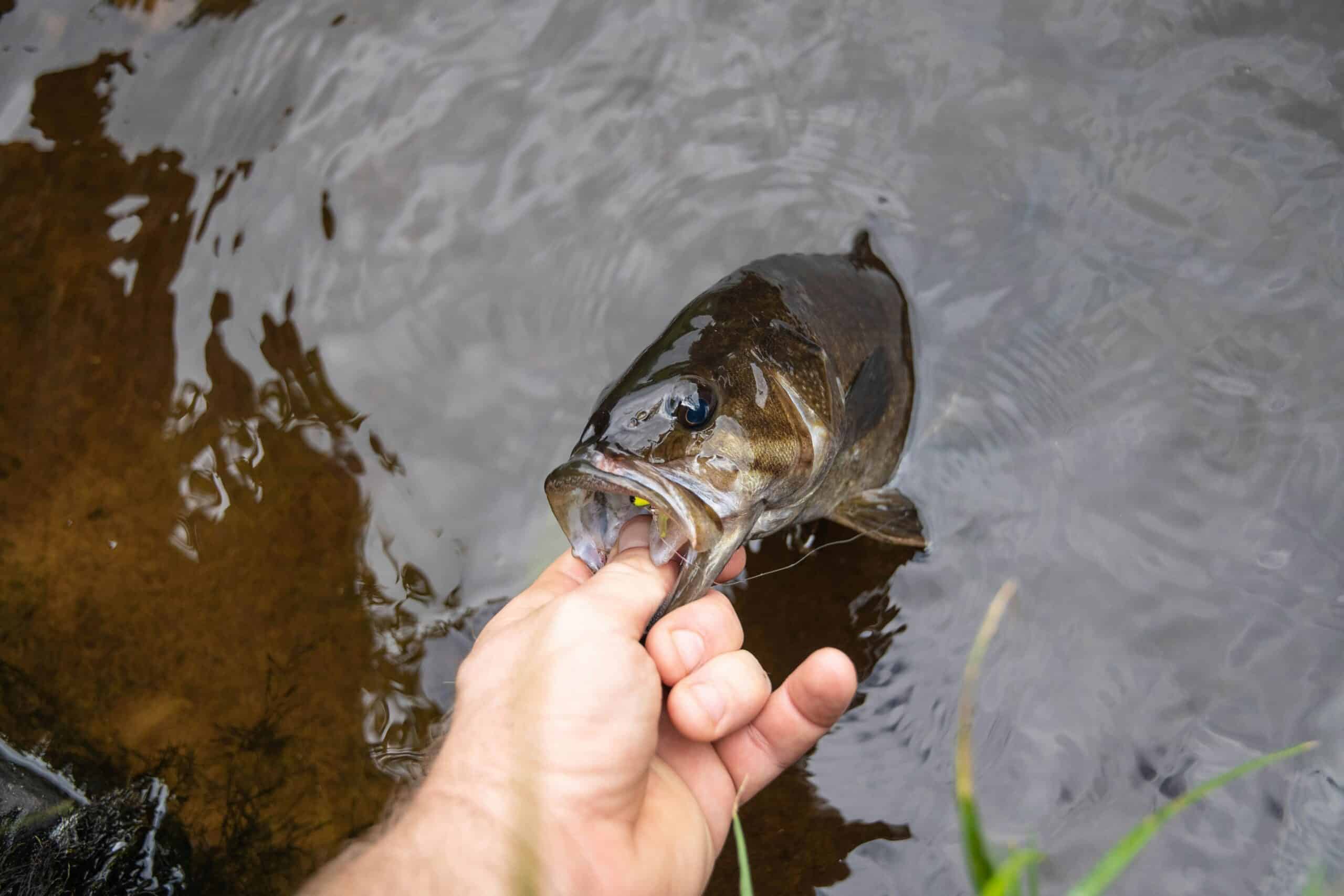
To catch bass as a beginner, fish near cover with a few reliable lures, work them slowly, and set the hook firmly when you feel a bite. Learning how to catch bass comes down to finding where they hide, showing them a bait they will eat, and being ready when they strike, none of which requires expensive gear. A simple spinning setup and a handful of dependable lures will catch fish, and it helps to know how to read the water so you fish the right spots. This guide walks through the whole process, from finding bass to landing and releasing them.
Quick Verdict
Target bass around cover like docks, wood, grass, and rocks, using a spinning rod with a soft plastic worm, a crankbait, or a jig. Fish slowly, watch and feel for the subtle bite, and set the hook with a firm sweep. Fish early or late in the day, adjust to the season and water conditions, and cover water until you find active fish.
Key Takeaways
- Bass relate to cover, so fish docks, wood, grass, and rocks.
- A spinning combo plus a few lures is all you need to start.
- Soft plastics, crankbaits, and jigs are reliable beginner baits.
- Fish slowly, and set the hook firmly on the bite.
- Season, weather, and water clarity change where and how bass feed.
How to Catch Bass Step by Step
These steps take you from arriving at the water to landing a fish. Start simple and refine as you learn what the bass want that day.
- Find cover. Look for docks, fallen trees, weed edges, rocks, and points, since bass hold near cover to ambush prey.
- Pick a reliable lure. Start with a soft plastic worm, a squarebill crankbait, or a jig, which cover most situations.
- Cast to the cover. Put your bait near or into the cover, not out in open water, and let it work through the strike zone.
- Work it slowly. Retrieve with pauses, letting the bait fall and rest, since many bites come as it drops.
- Detect the bite. Watch your line and stay in contact with the bait, since a bass bite is often a subtle tap, tick, or sideways movement.
- Set the hook. Reel up slack and set the hook with a firm sweep, then keep steady pressure as you fight the fish.
- Land and release. Guide the fish in without horsing it, land it by the lower lip, and release it gently if you are not keeping it.
Where Do You Find Bass?
Bass are ambush predators that relate to cover and structure, so that is where you fish. Look for anything that breaks up open water: boat docks, laydowns and submerged wood, weed beds and grass edges, rock piles and rip-rap, and points where the bank juts out. These spots give bass shade, protection, and a place to ambush passing prey, which is why a cast to a dock post or a fallen tree so often outproduces one into open water. In natural lakes and ponds, also watch for creek channels, drop-offs, and any change in bottom depth or type, since bass use these edges to travel and feed.
How Does the Season Change Where Bass Are?
Bass move predictably through the year, and following that pattern puts you on fish. In spring, warming water pulls bass shallow to spawn, making them some of the easiest fish to find and target around shallow cover and flats. Through summer heat, many bass pull out to deeper structure and feed hardest in the low light of early morning and evening, while shade and cooler water hold shallow fish midday. Fall triggers a feeding push as bass chase baitfish into creeks and across flats, often the best numbers of the year. In winter, bass slow down and hold deeper, so a slow, subtle presentation in the warmest part of the day works best. Matching your spot and pace to the season is one of the biggest levers a beginner has.
What Gear Do You Need to Catch Bass?
You do not need much to start. A medium-power spinning rod and reel spooled with a reasonable line is a versatile, beginner-friendly setup that handles most bass lures and is forgiving to cast. Add a small selection of baits, a few hooks and weights, a pair of pliers for removing hooks, and a way to carry it all. As you progress you can add a baitcasting outfit and rods matched to specific techniques, but a single spinning combo will catch plenty of bass while you learn the fundamentals. Keeping the kit simple also means you spend more time fishing and less time fiddling with tackle.
What Are the Best Lures for Beginners?
Three baits cover most situations, and learning to fish each one well matters more than owning dozens. A soft plastic worm rigged weedless is forgiving, inexpensive, and catches bass anywhere, making it the best confidence bait to start with. A squarebill crankbait lets you cover shallow cover quickly and triggers reaction strikes when it deflects off wood and rock. A jig is a dependable big-fish bait for working cover slowly along the bottom. Start with these three, match color to water clarity using natural tones in clear water and brighter ones when it is stained, and rotate through them until the fish show a preference.
How Do You Fish These Baits?
Each starter bait has a simple, effective retrieve. Fish a soft plastic worm by casting to cover, letting it sink, then slowly dragging and lifting it along the bottom with frequent pauses, since most bites come on the fall. Fish a squarebill crankbait by casting past shallow cover and reeling steadily so the bait bumps and deflects off wood and rock, pausing briefly when it ticks something. Fish a jig by pitching it to cover, letting it fall on a semi-slack line, then hopping and dragging it slowly with a firm hookset when you feel weight. In every case, slow down more than feels natural, since beginners almost always fish too fast.
How Do You Know When a Bass Bites?
A bass bite is not always a hard yank. It can feel like a tap, a sudden heaviness, a tick in the line, or your line simply swimming off to the side. With soft plastics and jigs especially, watch your line for movement and stay in contact with the bait so you feel the subtle bites, since many are easy to miss. When in doubt, reel up slack and set the hook, because a missed hookset costs nothing but a moment, while ignoring a real bite costs you the fish.
How Do You Adjust to the Conditions?
Reading the day and adapting turns slow trips into good ones. In muddy or stained water, use brighter, louder, or bulkier baits that bass can find by feel and sight, and fish tight to cover. In clear water, switch to natural colors and more subtle, finesse presentations, since bass see well and get wary. Wind and clouds usually make bass more active and willing to chase moving baits, while bright, calm, high-pressure days after a cold front often call for slowing down and fishing finesse baits right in the cover. Rather than fishing one spot all day, keep moving until you find active fish, then slow down and work that area thoroughly.
How Do You Land and Release a Bass?
Once a bass is hooked, keep steady pressure and let the rod absorb its runs rather than reeling against a fighting fish. Guide it toward you without horsing it, and for most bass you can land it by firmly gripping the lower lip, which calms the fish and controls it safely. If you are releasing it, wet your hands first, support the fish, remove the hook gently with pliers, and let it swim off under its own power rather than tossing it back. Handling fish carefully keeps the fishery healthy and means those bass are there to catch again.
When Is the Best Time to Catch Bass?
Early morning and late evening are usually the most productive, when lower light makes bass more willing to feed and move shallow. Overcast days can extend that activity into the afternoon, while bright midday sun often pushes bass tighter to cover and deeper. Bass can be caught all day, but starting at dawn or fishing into dusk stacks the odds in your favor, especially in warm weather when midday heat slows the shallow bite.
Common Beginner Mistakes to Avoid
Fishing open water instead of cover
Casting into the middle of nowhere rarely works. Target the docks, wood, grass, and rocks where bass actually hold.
Retrieving too fast
Beginners almost always reel too quickly. Slow down, add pauses, and let the bait fall, since that is when many bass strike.
Weak or late hooksets
A gentle or delayed hookset loses fish. Reel up slack and set firmly when you sense a bite.
Not adjusting to conditions
Using the same spot, color, and speed all day costs fish. Adapt to the season, water clarity, and weather rather than fishing on autopilot.
Recommended Reading
- bass lures, to build out your selection.
- crankbaits for bass, a key beginner search bait.
- jigs for bass, the big-fish bait for cover.
- setting the hook, to convert more bites.
How to Catch Bass FAQ
What is the easiest way to catch bass for a beginner?
Fish a weedless soft plastic worm near cover, working it slowly with pauses. It is forgiving, inexpensive, and catches bass in almost any water, which makes it the best confidence bait to start with while you learn to read bites.
What is the best bait for bass?
There is no single best bait, but soft plastic worms, crankbaits, and jigs cover most situations for beginners. Start with those three, match color to water clarity, and let conditions guide which one you tie on.
Where is the best place to catch bass?
Near cover and structure: docks, fallen wood, grass edges, rocks, and points. Bass hold near these to ambush prey, so casting to cover rather than open water is the key to consistent catches.
What time of day is best for bass fishing?
Early morning and late evening are usually best, when low light makes bass feed actively and move shallow. Overcast days help too, while bright midday sun tends to push bass deeper and tighter to cover.
What is the best season to catch bass?
Spring and fall are often the easiest, when bass feed heavily in shallow, accessible water, spring around the spawn and fall as they chase baitfish. Summer and winter still produce, but usually call for fishing deeper or during specific windows of the day.
Do I need a boat to catch bass?
No. Plenty of bass are caught from the bank, docks, and shorelines by fishing accessible cover. Focus on reachable spots with visible cover, and you can catch bass without any boat at all.
How do I set the hook on a bass?
Reel up any slack line, then sweep the rod firmly to drive the hook home, and keep steady pressure as you fight the fish. With soft plastics and jigs, a firm set matters most because the hook must move through the bait.
How should I handle a bass before releasing it?
Wet your hands, support the fish, and grip it by the lower lip to control it while you remove the hook with pliers. Release it gently and let it swim off on its own, which keeps the fish healthy and the fishery strong.
