
A flask that keeps coffee hot for six hours instead of twelve is not a failure of the vacuum, it is usually the lid, the fill level, or the fact that you opened it three times. Understanding what actually drains heat tells you more than any advertised retention figure.
| What affects retention | How much it matters |
|---|---|
| Vacuum insulation quality | Sets the ceiling |
| Lid design and seal | Largest single variable after the vacuum |
| Fill level | Half-full loses heat far faster |
| Preheating the flask | Adds hours in cold conditions |
| Number of times opened | Each opening costs significant heat |
| Ambient temperature | Advertised figures assume room temperature |
Key Points
- Advertised retention assumes a full flask opened once
- Lid design matters more than wall thickness
- Preheating with boiling water adds hours
- Wide mouths clean easily and lose heat faster
- Stainless steel outlasts every alternative
- Dents in the outer wall can break the vacuum
How We Picked
Vacuum construction came first, since double-wall stainless with a proper vacuum sets the ceiling on everything else.
Lid design ranked next. A stopper with an insulated core holds heat far better than a thin plastic cap, and a pour-through lid trades retention for convenience.
Cleaning mattered because a flask used for coffee and soup develops odor, and narrow-mouth designs are difficult to clean properly.
Durability counted for anything carried on a pack, since a dented outer wall can compromise the vacuum and turn a good flask into an ordinary bottle.
Classic Narrow-Mouth Vacuum Flasks
Why It Stands Out
A narrow opening exposes less liquid surface when you open it, which is why traditional designs hold heat longest.
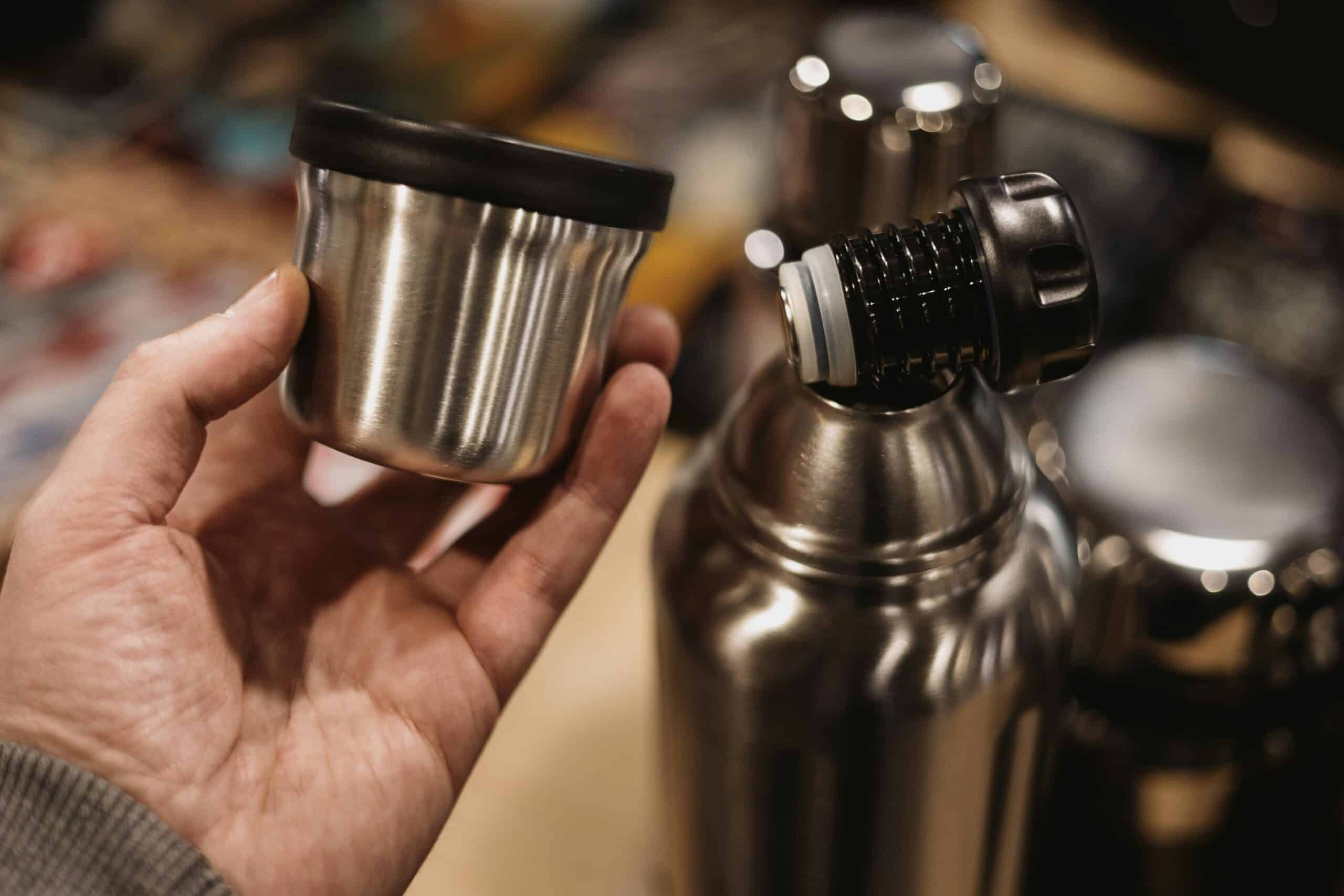
Screw-on stoppers with an insulated core seal better than flip lids, and the cup that doubles as a lid keeps the drinking surface clean.
Twelve to twenty-four hour retention claims come from this style, measured full and opened once.
Worth Knowing
Narrow mouths are hard to clean, and coffee oils build up where a bottle brush cannot reach.
Pouring into a cup means two things to hold, which is awkward in gloves on a windy ridgeline.
Good for long cold days where retention matters most. Skip if you want to drink directly from it, and warm drinks on trail sit in camping coffee makers.
Wide-Mouth Insulated Bottles
Why It Stands Out
A wide opening takes ice, cleans properly with a brush, and handles soup or stew as well as drinks.
For anyone using one flask across seasons, wide mouth is considerably more versatile than a dedicated hot-drink design.
They also drink directly, which removes the separate cup.
Worth Knowing
Retention is shorter than a narrow-mouth flask of the same quality, since more surface is exposed each time you open it.
Drinking directly from something holding boiling liquid needs care, which is why many include a narrower drinking lid as a second option.
Good as a single flask for mixed use. Skip if maximum heat retention is the priority, and cold drinks sit in insulated water bottles.
Food Jars for Soup and Stew
Why It Stands Out
A short wide jar suits food rather than drink, and hot food on a cold day does more for morale than coffee does.
The wide opening takes a spoon, and folding spoons in the lid appear on several designs.
Preheated properly, a food jar keeps a meal hot enough to eat at lunch after a morning of hiking.
Worth Knowing
Wide short shapes lose heat faster than tall narrow ones, so preheating matters more here than anywhere else.
Food residue makes cleaning essential rather than optional, and anything left overnight becomes unpleasant.
Good for winter day hikes and cold-weather camping. Skip for drinks, where a flask holds heat longer, and trail food sits in hiking snacks and trail food.
Lightweight Titanium and Slim Flasks
Why It Stands Out
Weight matters on any long day, and slim insulated flasks cut several hundred grams against a large stainless one.
Slim profiles also fit pack side pockets designed for water bottles, which a wide flask does not.
For a single hot drink rather than a supply, smaller capacity is the right call.
Worth Knowing
Smaller volume loses heat faster because of the surface-to-volume ratio, so a half-liter flask underperforms a full-liter one of identical build.
Titanium single-wall bottles are not insulated at all, which catches people out. Insulation requires a vacuum between two walls regardless of material.
Good for fast light days. Skip single-wall titanium if you want heat retention, and pack organization sits in packing a hiking backpack.
Insulated Mugs With Lids
Why It Stands Out
An insulated mug at camp keeps a drink warm through the twenty minutes it takes to actually finish it, which an uninsulated cup does not.
Sealing lids let you set one down on uneven ground without losing it, and carry it while walking around camp.
They pair with a flask, holding the poured drink rather than replacing the storage.
Worth Knowing
Mugs are for holding heat over minutes rather than hours, and treating one as a flask disappoints.
Lids with sliding closures collect grounds and residue in the mechanism.
Good at camp and paired with a flask. Skip as your only insulated vessel, and camp cooking sits in camp cookware sets.
Insulated Sleeves and Pouches
Why It Stands Out
A neoprene sleeve adds a layer outside the vacuum wall, which helps at genuine extremes and protects against the dents that damage a vacuum.
Sleeves also stop a metal flask from freezing to bare skin, which is a real issue in serious cold.
They cost little and extend the life of an expensive flask.
Worth Knowing
The gain in retention is modest, since a working vacuum already blocks most conduction. The protection matters more than the insulation.
Sleeves add bulk, which can stop a flask fitting the pack pocket it was chosen for.
Good for extreme cold and pack-carried flasks. Skip expecting a large retention gain, and cold gear sits in cold weather hiking gear.
What to Look For
Check the lid, not the wall
Vacuum quality is similar across reputable brands. Lid design and seal are where retention actually differs.
Size it to what you drink
A half-full flask loses heat far faster than a full one. Buying a size you actually fill beats buying the largest available.
Decide between retention and cleaning
Narrow mouths hold heat longest and clean worst. Wide mouths reverse both, and no design does everything.
Look for stainless throughout
Plastic interior components hold coffee odor permanently. Stainless interiors and stoppers avoid that.
Getting the Advertised Retention
Preheat the flask
Fill with boiling water, leave for two minutes, and pour it out before filling. The steel wall starts warm rather than stealing heat from your drink, which adds hours in cold conditions.
Fill it completely
Air in the flask holds no heat and cools the liquid. A full flask outperforms a half-full one of the same design by a wide margin.
Open it rarely
Each opening exchanges hot air for cold. A flask opened once at lunch holds heat far longer than one sipped every twenty minutes.
Keep it inside the pack
A side pocket exposes the flask to wind. Inside the pack, surrounded by gear, retention improves noticeably.
Cleaning and Long-Term Care
A flask that smells of yesterday’s coffee gets left in a cupboard, so cleaning decides whether you keep using one.
Rinse it the day you use it rather than the day you next need it. Coffee oils and soup residue both set into a film that a rinse handles easily and a week later does not.
Use a bottle brush that reaches the bottom. The base is where residue collects, and swirling soapy water past it does very little.
Baking soda and hot water left overnight removes odor that washing up liquid cannot. For persistent staining, a denture tablet does the same job with less effort.
Dry it open and upside down. A sealed damp flask grows what you would expect, and stoppers with rubber gaskets hold moisture in the threads.
Remove and clean the gasket occasionally. That is where mold appears first on any flask used for anything other than water, and most stoppers come apart with a twist.
Flasks Against Insulated Bottles
Flasks
Narrow openings, insulated stoppers, and separate cups all serve heat retention. They handle a full cold day and clean poorly.
Insulated bottles
Wide mouths, direct drinking, and easy cleaning suit mixed use across seasons. Retention is shorter, which matters less on a shorter day.
Common Misconceptions
That advertised hours are what you get
Those figures come from a full flask, preheated, opened once, at room temperature. A half-full flask opened repeatedly on a cold ridgeline performs very differently.
That thicker walls insulate better
The vacuum does the work rather than the metal. Wall thickness affects durability rather than retention.
That titanium bottles keep drinks hot
Single-wall titanium has no vacuum and no insulation. Material does not create insulation, the vacuum between two walls does.
That a dent is cosmetic
A hard impact can breach the vacuum, after which the flask performs like an ordinary bottle. Nothing external reveals it until you notice drinks cooling fast.
Worth reading next: insulated water bottles covers the cold-drink side, cold weather gear covers the wider kit, and camping coffee makers covers making the drink. For winter days specifically, base layers and layering are the relevant guides.
Frequently Asked Questions
How long does a good thermos actually keep drinks hot?
A quality flask filled and preheated holds drinkable heat for most of a day. Advertised twelve or twenty-four hour figures assume a full flask opened once at room temperature.
Does preheating make a difference?
Considerably. Filling with boiling water for two minutes and pouring it out warms the steel wall, which otherwise takes heat from your drink. It adds hours in cold conditions.
Why does my flask cool faster than it used to?
Usually a damaged vacuum from a hard impact, or a worn lid seal. Nothing external shows the vacuum has failed until drinks start cooling quickly.
Narrow mouth or wide mouth?
Narrow holds heat longer and cleans poorly. Wide cleans easily, takes food and ice, and loses heat faster each time you open it.
Does fill level matter?
A lot. Air in the flask holds no heat and cools the liquid, so a half-full flask underperforms a full one of the same design substantially.
Are titanium bottles insulated?
Single-wall ones are not. Insulation comes from a vacuum between two walls, and material alone does nothing for retention.
Where should I carry it?
Inside the pack rather than a side pocket. Wind on an exposed flask costs measurable heat over a day.
Recommended Reading
See our note on planning a hiking route.
