
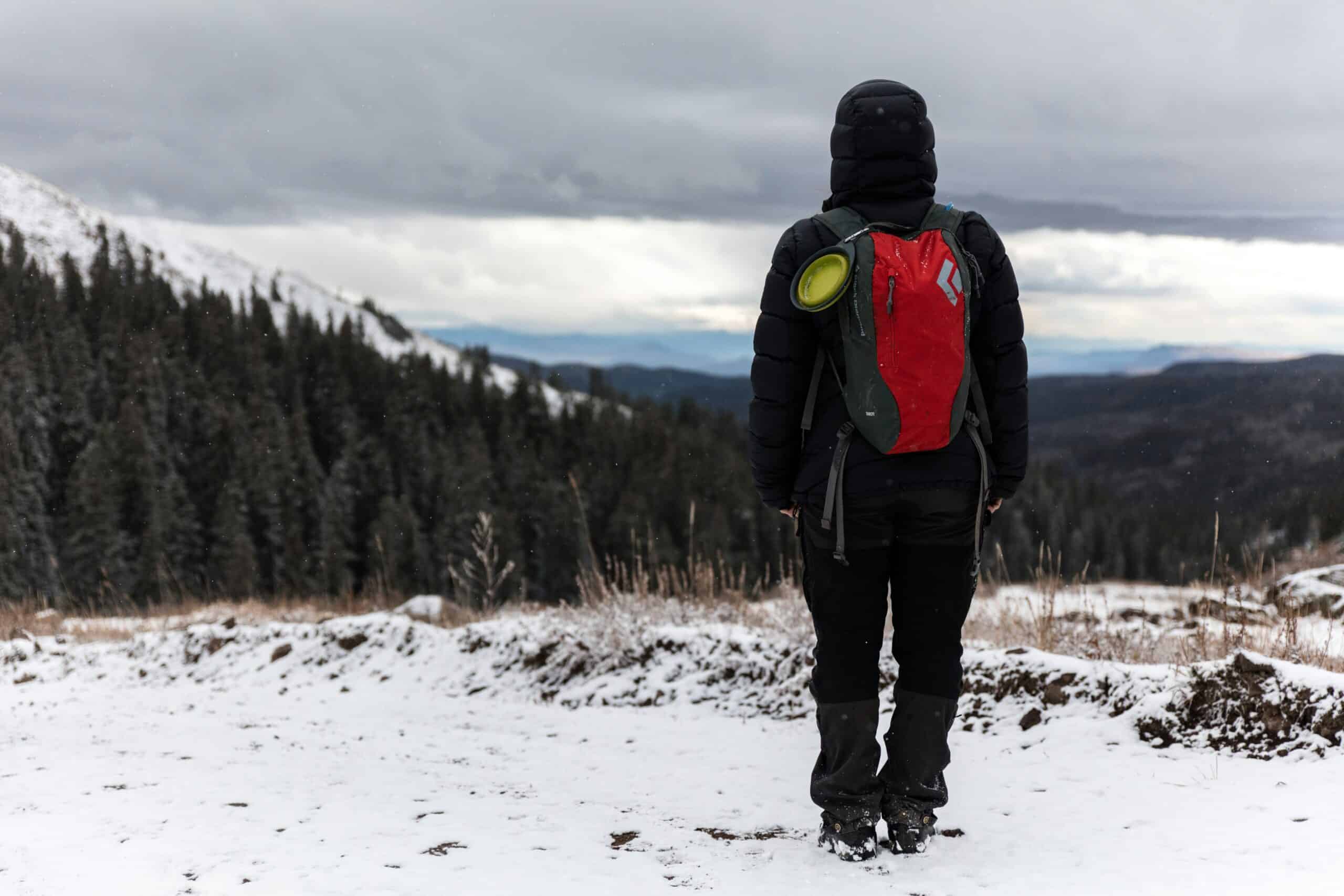
A base layer manages moisture rather than providing warmth, which is the part most people get backwards. Sweat sitting against your skin cools you faster than cold air does, and the layer touching you decides whether that sweat moves outward or stays put.
Cotton fails here specifically because it holds water and loses insulating value when wet. That is the reason the phrase about cotton exists in hiking, and it matters most in winter when stopping cold is the risk.
Quick Verdict
Merino wool for most winter hiking, since it manages moisture well and resists odor across multiple days. Synthetic for high-output days and hard use, where it dries faster and survives more abrasion. Fit matters as much as fiber, because a loose base layer cannot wick anything.
Key Takeaways
- Base layers move moisture rather than trapping heat
- Cotton loses insulating value when wet
- Merino resists odor, synthetic dries faster
- Snug fit is required for wicking to work
- Weight is measured in grams per square meter
- Overdressing at the trailhead causes the sweat problem
How We Picked
Moisture handling came first, since that is the job. A layer that holds sweat against your skin makes you colder at every stop.
Fit ranked next. Wicking depends on fabric contact, and a loose base layer sits away from skin and moves nothing.
Weight mattered because winter covers a wide range. A lightweight layer under a hard shell on a climb differs from a heavyweight layer for a slow cold day.
Durability counted for anyone hiking with a pack, since shoulder straps and hip belts wear thin merino faster than people expect.
Midweight Merino Wool Tops
Why It Stands Out
Merino manages moisture while retaining some insulating value when damp, which is the specific advantage over cotton and part of the advantage over synthetic.
It resists odor across several days, which matters on multi-day trips where washing is not an option.
Midweight, roughly 200 to 250 grams per square meter, suits most winter hiking as the layer against skin.
It also handles a wide temperature range, staying comfortable when you warm up on a climb rather than only when standing still.
Worth Knowing
Merino wears through at friction points, particularly under pack straps. Blends with a small percentage of nylon last considerably longer.
It dries slower than synthetic, which matters on a day where you sweat heavily and then stop.
Good for most winter days and multi-day trips. Skip pure merino if your pack rubs, and layering generally sits in how to layer clothing for hiking.
Synthetic Base Layers
Why It Stands Out
Polyester and polypropylene move moisture faster than wool and dry faster once wet, which suits high-output days where you generate real sweat.
They cost considerably less than merino and survive abrasion better, so a pack does not wear holes in them.
Grid fleece constructions trap air in the channels while still moving moisture, which adds warmth without much weight.
Worth Knowing
Synthetic holds odor badly. A merino layer goes several days and a synthetic one often needs washing after each use.
It also feels colder against skin when wet, even while drying faster, which is uncomfortable during rest stops.
Good for hard efforts and single-day trips. Skip for multi-day use unless you can wash, and cold gear generally sits in cold weather hiking gear.
Base Layer Bottoms
Why It Stands Out
Legs get overlooked because they generate heat while moving, and they lose it fast at rest stops and on exposed ridgelines.
A midweight bottom under hiking pants adds real warmth for very little bulk, and it comes off if you overheat.
Flat seams matter more here than on tops, since a raised seam under a pack belt or against a saddle chafes.
Worth Knowing
Removing bottoms mid-hike means removing boots, so people rarely do it. Choosing conservatively at the trailhead matters more than with a top.
Full-length versions bunch inside boots. Three-quarter lengths avoid that on some designs.
Good for cold days and anyone who stops often. Skip heavyweight bottoms for high-output days, and chafing sits in preventing chafing on long hikes.
Lightweight Layers for High Output
Why It Stands Out
Around 150 grams per square meter and below suits steep climbs and fast hiking, where a heavier layer means soaking it within twenty minutes.
Lighter fabric moves moisture faster and dries sooner, which matters when you are producing sweat continuously.
They also layer better under an insulated midlayer without bulk at the shoulders.
Worth Knowing
Lightweight merino is fragile, and pack straps wear it through in a season of regular use.
Standing still in one on a cold summit is genuinely cold, so this suits a system with a warm midlayer rather than a standalone choice.
Good for steep terrain and fast hiking. Skip for slow cold days with long stops.
Heavyweight and Expedition Layers
Why It Stands Out
Above 250 grams per square meter, base layers start providing real insulation as well as moisture management, which suits genuinely cold conditions and slow pace.
For winter camping, ice fishing, and hunting from a stand, where you sit still in the cold, this weight makes the difference.
Some use a brushed interior that feels warmer against skin immediately.
Worth Knowing
They overheat fast on any sustained climb. Wearing one for an ascent usually means soaking it.
Bulk under a midlayer restricts movement at the shoulders, which matters for anything requiring reach.
Good for static cold and very low temperatures. Skip for anything with sustained effort, and hunting use sits in hunting blinds.
Liner Socks and Glove Liners
Why It Stands Out
Hands and feet suffer first in cold, and the same base layer principle applies. A thin liner moves moisture away from skin before the outer layer traps it.
Liner socks under a hiking sock reduce blisters as well, since friction happens between the two layers rather than against your skin.
Glove liners let you handle a phone or a zipper without removing everything.
Worth Knowing
Adding a liner sock inside boots that already fit snugly creates pressure, which causes the problem it was meant to prevent.
Liners wear out quickly and are consumables rather than long-term purchases.
Good in cold conditions and for blister-prone feet. Skip if boots are already tight, and sock selection sits in hiking socks.
Base Layer Weights at a Glance
| Weight | Range | Best for |
|---|---|---|
| Lightweight | Under 150 g/m² | Steep climbs, fast hiking |
| Midweight | 200 to 250 g/m² | Most winter hiking |
| Heavyweight | Above 250 g/m² | Static cold, very low temperatures |
| Merino | Any weight | Multi-day, odor resistance |
| Synthetic | Any weight | High output, durability, cost |
What to Look For
Match weight to your pace
Fast hiking on steep ground needs less than a slow walk in the same temperature. Effort matters more than the forecast.
Buy it snug
Wicking requires fabric touching skin. A loose base layer traps a pocket of damp air and moves nothing outward.
Check for nylon in merino
A small percentage of nylon multiplies the life of a merino layer, particularly at pack contact points.
Look at seam placement
Flatlock seams and shoulder seams positioned away from strap lines both prevent the rubbing that ends a layer early.
Managing the Layer on the Trail
Buying the right base layer matters less than what you do with it once you are moving.
Start cold. Standing at the trailhead feeling comfortable means you are dressed for standing still, and ten minutes of climbing will soak the layer you just put on. Being slightly uncomfortable for the first few minutes is the correct amount.
Vent before you sweat rather than after. Opening a jacket, pushing up sleeves, and removing a hat all dump heat quickly, and doing it early keeps the base layer dry.
Add a layer the moment you stop. Sweat that felt fine while moving turns cold within a minute of standing still, which is when people get into trouble on winter summits.
Carry a spare on multi-day trips. Sleeping in the layer you hiked in means sleeping in damp fabric, and a dry sleeping layer is one of the better comforts you can carry.
Wash merino gently and infrequently. Hot water and standard detergent shorten its life considerably, and it needs washing far less often than synthetic anyway.
Merino Against Synthetic
Merino
Better across a temperature range, resists odor for days, and retains some warmth when damp. It costs more, dries slower, and wears through at friction points.
Synthetic
Dries faster, survives abrasion, and costs considerably less. It holds odor badly and feels colder when wet, which suits single days more than multi-day trips.
What Trips People Up
Wearing cotton
It absorbs sweat, holds it against skin, and loses insulating value when wet. In winter that turns a rest stop into a real problem.
Starting the hike warm
Feeling comfortable at the trailhead means you will sweat within ten minutes. Starting slightly cold is the standard approach for a reason.
Buying one weight for all winter
A layer suited to a slow cold day soaks through on a steep climb. Two weights cover far more conditions than one heavier layer.
Choosing a loose fit for comfort
A base layer that does not touch skin cannot wick. Snug is the functional requirement rather than a style preference, and staying dry sits in staying dry hiking in the rain.
Recommended Reading
- layering systems
- cold weather gear
- socks
- insulating midlayers
- winter traction
- hand protection
- planning a hiking route
Related: merino vs synthetic base layers.
Related: dress for a winter day hike.
Related: winter hiking goggles and eye protection.
Frequently Asked Questions
What should I wear as a base layer for winter hiking?
Midweight merino for most conditions, around 200 to 250 grams per square meter. Synthetic suits high-output days where you sweat heavily and want faster drying.
Why is cotton bad for hiking?
It absorbs sweat, holds it against your skin, and loses insulating value when wet. In winter that makes you colder at every stop rather than warmer.
Is merino worth the extra cost?
For multi-day trips and a wide temperature range, generally. It resists odor for days and retains some warmth when damp, while synthetic dries faster and costs less.
How tight should a base layer be?
Snug against skin without restricting movement. Wicking depends on fabric contact, so a loose layer traps damp air instead of moving it outward.
Do I need base layer bottoms?
On cold days and anywhere you stop often, they add real warmth for little bulk. They are hard to remove mid-hike, so choose conservatively at the trailhead.
What weight should I buy?
Midweight covers most winter hiking. Lightweight suits steep climbs where you generate heat, and heavyweight suits sitting still in genuine cold.
How many should I own?
Two weights cover far more conditions than one. A lightweight for high output and a midweight for general use handles most of a winter season.
