
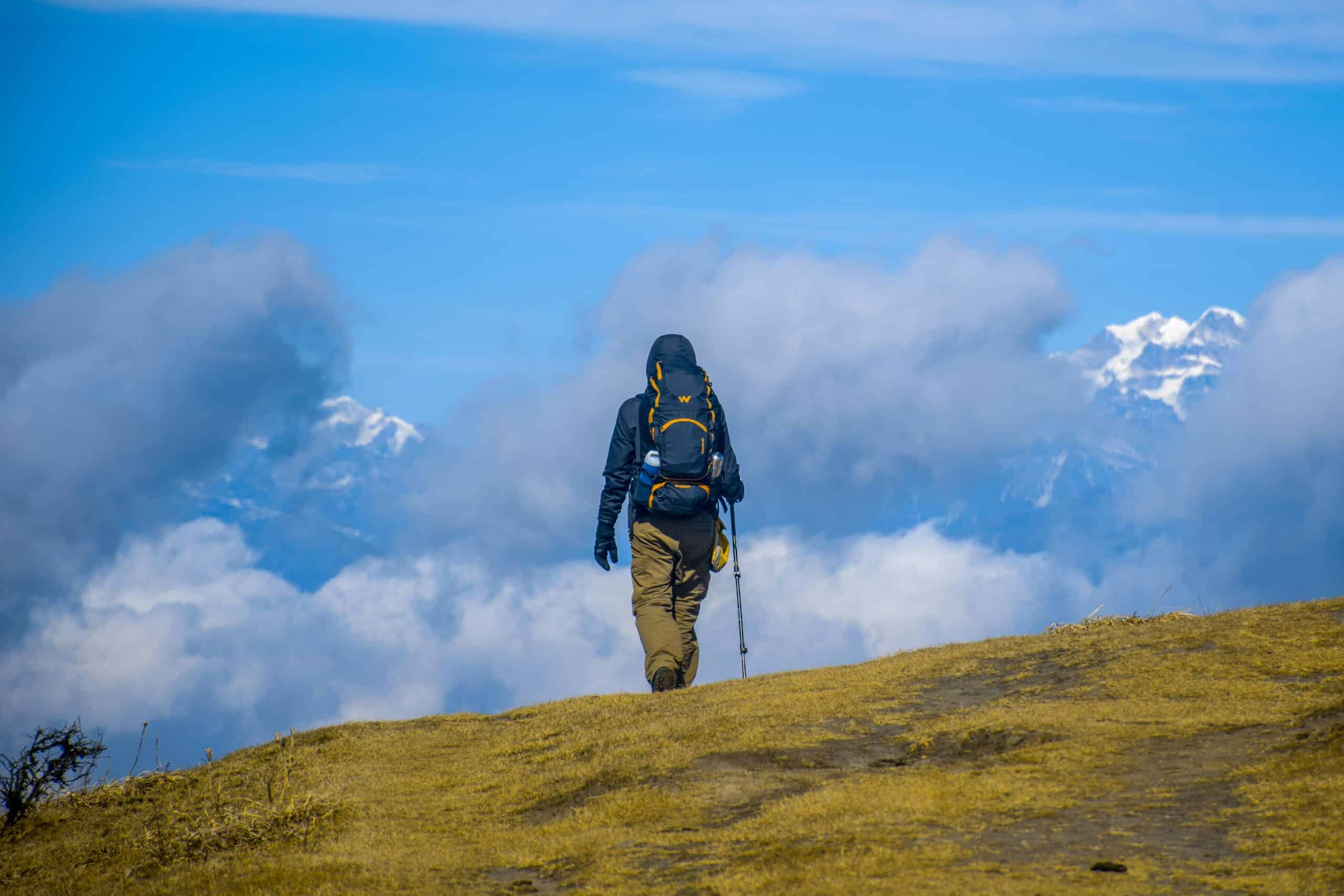
Trekking poles are one of the more divisive pieces of hiking equipment. Some people find them essential and others carry them once and never again, and both groups are usually describing different terrain.
The honest answer is that the benefit is largest on descents and with a loaded pack, and smallest on flat easy ground. Our roundup of trekking poles covers the hardware.
Quick Answer
Yes on descents, on uneven ground, and when carrying weight. Marginal on flat maintained trail. The main costs are occupied hands and reduced balance practice.
Where the Benefit Is Largest
| Situation | Benefit |
|---|---|
| Steep descent | Substantial, reduces load on knees |
| Heavy pack | Substantial, spreads load to arms |
| Stream crossings | Substantial, adds points of contact |
| Loose or rocky ground | Meaningful, catches stumbles |
| Sustained climbing | Moderate, engages upper body |
| Flat maintained trail | Minimal |
What Happens on Descents
Descending loads the legs eccentrically, meaning muscles lengthen while absorbing impact, which is harder on tissue than the shortening contractions of climbing.
Poles let arms take a share of that impact before it reaches the knees, which is the mechanism behind the most common reason people start using them.
Research on the subject has generally found reduced ground reaction forces and lower reported muscle soreness afterward, though the size of the effect varies between studies.
Anyone whose knees complain the day after a long descent is the clearest case for trying them. Our note on why toes hurt going downhill covers a related descent problem.
What They Do on Climbs
The climbing case is weaker than the descent case and it is not nothing.
Poles let the arms and shoulders contribute to forward propulsion, spreading effort across more muscle rather than concentrating it in the legs.
That matters most late in a long climb, when leg fatigue rather than cardiovascular capacity is the limiting factor.
The trade is that recruiting the upper body raises overall energy demand slightly, so on a short climb with fresh legs there is little to gain.
Rhythm is the underrated part. Many hikers find that planting poles in time with their steps produces a steadier cadence on a long ascent, which does more for sustained pace than any mechanical assistance. Our note on planning a hiking route covers pacing.
The Balance Argument
Four points of contact
Two poles turn walking into something closer to four-legged movement, which matters on loose rock and stream crossings.
Catching stumbles
A pole planted quickly converts a fall into a stumble, which is the benefit people notice only when it happens.
Confidence changes pace
Feeling stable encourages a steadier rhythm rather than the stop-start of picking through uncertain ground.
Snow and mud
Probing ahead for depth and firmness is difficult without something to probe with. Our roundup of pole tips and baskets covers surface adaptation.
The Case Against
Your hands are occupied, which matters more than expected. Drinking, taking photographs, checking a map, and scrambling all become a two-stage operation.
Some argue that relying on poles reduces the balance and proprioception that develop from walking unaided, and that the dependency is worth avoiding.
There is a modest energy cost to moving the arms, and on flat ground with a light pack that cost may exceed the benefit.
They are also another thing to carry, stow, and maintain, which is a real consideration on a short hike where the benefit is smallest. Our roundup of hiking daypacks covers carrying them.
What the Research Suggests
Studies have consistently found reduced ground reaction forces at the knee when poles are used on descents, which is the most robust finding.
Reported muscle soreness in the days after a long descent tends to be lower among pole users, which follows from the same mechanism.
Findings on energy cost are more mixed. Some studies show a slight increase in oxygen consumption from arm movement, others show no meaningful difference at typical hiking pace.
Perceived exertion is generally reported as lower with poles even where measured energy cost is unchanged, which is worth knowing since perceived effort is what determines whether a hike feels manageable.
Other Uses People Forget
Poles earn their place in ways that have nothing to do with walking.
Many ultralight tents and tarps pitch using trekking poles instead of dedicated tent poles, which removes a separate item from the pack entirely.
Probing is the safety use. Checking depth at a stream crossing, testing snow, or finding the bottom of a mud patch all need something expendable rather than a leg.
Clearing overhanging vegetation and spider webs across a trail is a small daily convenience on overgrown paths.
You can see why descending needs training before deciding.
And a pole makes a serviceable splint or the frame of an improvised carry in an emergency, which is the reason some hikers take them on trips where the walking itself would not require them. Our roundup of hiking first aid kits covers the wider safety kit.
Who Benefits Most
Anyone with knee problems
The descent load reduction is the clearest and most consistently supported benefit.
Backpackers carrying weight
The heavier the pack, the more there is to transfer away from the legs.
People returning from injury
Additional stability while confidence rebuilds, which is a temporary rather than permanent use.
Anyone crossing water regularly
A pole probing depth and providing a third contact point changes what is safely crossable. Our note on hiking poles for women covers terrain assessment.
None of those groups is universal, and each describes a situation where the mechanical benefit is large enough to outweigh occupied hands and extra weight.
Using Them Badly Cancels the Benefit
Poles set too long on a descent force the arms up and forward, which removes the downward push that transfers load.
Gripping tightly rather than letting the straps take the weight tires the forearms and does little for the legs.
Planting the poles too far ahead turns them into a braking action rather than a support, which fights forward momentum.
And carrying two poles while only using one leaves the benefit halved and the cost unchanged. Our note on adjusting pole height covers setting them correctly.
Terrain Decides the Answer
Most disagreements about poles are really disagreements about where people hike.
Someone walking maintained flat trail with a light daypack is describing a situation where poles genuinely add little, and they are not wrong about their own experience.
Someone descending several thousand feet with an overnight pack is describing a completely different activity, and their conclusion is equally valid.
Terrain also changes within a single hike, which is why some people carry poles collapsed on the pack and deploy them only for the descent. Our note on why do my trekking poles collapse when i lean on them covers that in more detail.
That approach gets the benefit where it exists and avoids the cost where it does not, and it is a reasonable answer for anyone unconvinced by the all-or-nothing framing. Our roundup of hiking socks covers carrying them stowed.
Trying Before Committing
Borrowing or renting for one hike with real descent is the most informative test, since flat ground will not show the difference.
A single adjustable pole is a reasonable low-cost trial, and it delivers roughly half the benefit rather than none.
Rental is available at many trailhead outfitters and outdoor stores, which is cheaper than buying and discovering they are not for you.
The verdict usually arrives the morning after rather than during the hike, since reduced soreness is the effect people notice most clearly. Our roundup of trekking poles versus a hiking staff covers the single-pole option.
Trekking Pole FAQ
Do trekking poles actually help?
On descents, uneven ground, and with a loaded pack, yes. On flat maintained trail with a light pack the benefit is minimal.
What is the main benefit?
Transferring impact away from the knees on descent. Research consistently finds reduced ground reaction forces and lower reported soreness afterward.
Do they make hiking easier?
Perceived exertion is generally reported as lower even where measured energy cost is unchanged, which affects how manageable a hike feels.
Are there downsides?
Occupied hands, a small energy cost from arm movement, and something extra to carry and maintain. Some argue they reduce natural balance development.
One pole or two?
Two delivers the full benefit. One gives roughly half and is a reasonable way to try the idea cheaply.
Who should use them?
Anyone with knee problems, backpackers carrying weight, people returning from injury, and anyone regularly crossing water.
Can using them wrong cancel the benefit?
Yes. Poles set too long on descent, gripping instead of using the straps, and planting too far ahead all undo the advantage.
How do I know if they suit me?
Borrow or rent for one hike with real descent. The answer usually arrives the following morning rather than on the trail.
