
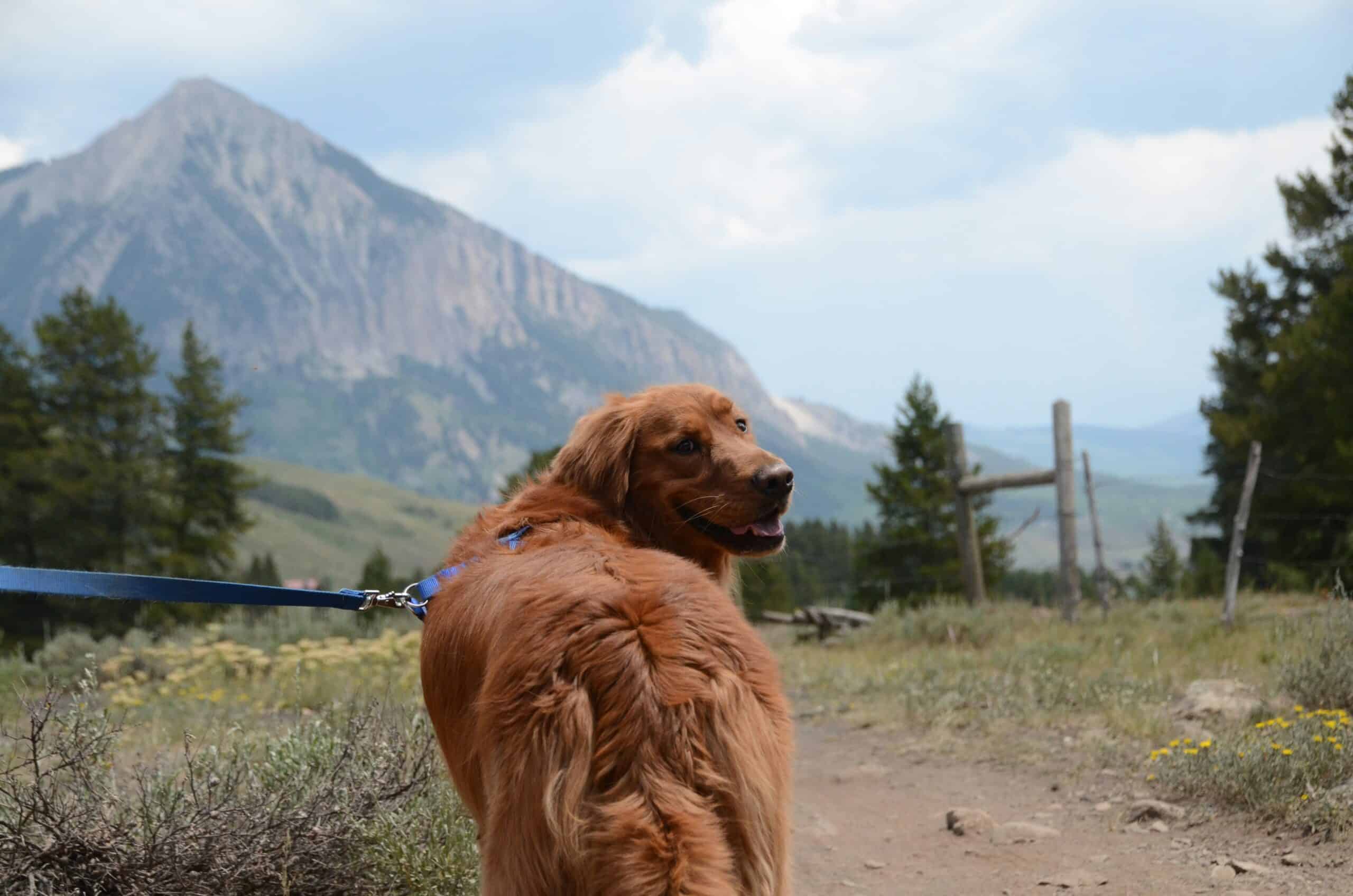
Start well below what your dog seems capable of, carry water for both of you, and check paws at every break. Learning how to hike with a dog is mostly about pacing and heat, because dogs will keep going past the point where they should stop and they shed heat far less efficiently than people do. Our guide on how hot is too hot to hike covers the temperature side for both of you.
A Quick Note
This covers general trail practice rather than veterinary advice. Fitness, breed, age and health all change what a dog can safely do, and a vet is the right source for your specific dog. Anyone whose dog shows signs of heat stress, lameness or distress on trail should stop immediately and seek veterinary care.
Quick Answer
Build distance gradually over weeks rather than testing a long hike cold. Hike early to avoid heat, carry roughly a liter of water per twenty pounds of dog for a full day, stop every half hour in warm weather, and check paw pads at each stop. Turn around on the first sign of heavy distress rather than pushing to a summit.
Key Points
- Dogs cool by panting, which works poorly in humidity.
- Pavement and rock burn pads long after air cools.
- Dogs hide fatigue and pain until it is severe.
- Most trail conflict comes from recall rather than leashes.
- Build mileage over weeks, not in one weekend.
How Far Can a Dog Actually Go?
| Situation | Reasonable starting point | Watch for |
|---|---|---|
| Young adult, conditioned | Build toward full days | Paw wear on rock |
| Young adult, unconditioned | Short, flat, cool | Next day stiffness |
| Puppy, growth plates open | Very short, ask a vet | Joint stress |
| Senior dog | Short and level | Slowing, lagging |
| Flat faced breeds | Cool days, short | Breathing difficulty |
| Thick coated breeds | Cold weather suits them | Overheating in summer |
The American Veterinary Medical Association notes that heat related illness in dogs develops quickly and that flat faced breeds face higher risk, which makes conditions matter more than mileage on paper.
Heat Is the Thing That Actually Hurts Dogs
Dogs cool by panting rather than sweating. Panting works less well as humidity rises, so a humid seventy five degree day can be harder than a dry ninety.
They also run closer to the ground. Radiant heat off rock and dirt reaches a dog far more than it reaches you.
Watch for heavy sustained panting, thick drooling, bright red gums, stumbling or a dog that lies down and will not get up. Those signs mean stop, move to shade and cool the dog rather than continue.
Hike early and turn around earlier than you would alone. Our guide on recognizing heat exhaustion on the trail covers the human version of the same problem.
Paws Take More Damage Than Anything Else
Pads look tough and wear through faster than owners expect. Coarse granite, scree and hot sand all abrade them.
Heat is worse than abrasion. Rock and pavement hold heat for hours after air temperature drops, and the back of a hand held to the surface for several seconds is a fair test.
Check pads at every break rather than at the end. Early redness is a signal to turn around, while a torn pad on the way out is a carrying problem.
Booties help on rough or hot ground, though most dogs need practice at home first. Cracked or bleeding pads warrant a vet rather than a bandage and another mile.
Water for Two
Dogs need more water than people relative to size, especially in heat. Plan on carrying it rather than relying on streams.
Natural water carries parasites and bacteria that affect dogs as much as people. Filter it if you use it, and our roundup of water filters for hiking covers options that work for both.
Offer water at every stop rather than waiting for obvious thirst. A dog that has stopped drinking during exertion is already behind.
Our guide on carrying water on a hot hike covers volume and containers, and our roundup of portable water bottles covers what pours easily into a bowl.
Trail Manners That Prevent Problems
Check the rules before you drive out. Many national parks prohibit dogs on trails entirely, while national forests and state parks usually allow them.
Yield to everyone. Step off the trail and hold the dog close as hikers, runners and horses pass, and horses in particular need space and calm.
Recall matters more than the leash debate. An off leash dog that does not return reliably is the source of most conflict on shared trails.
Pack waste out rather than bagging it and leaving it beside the trail. Our guide on planning a hiking route covers checking regulations before you commit to a trailhead.
Wildlife and Other Hazards
A loose dog can find wildlife you would never have met. Dogs chase, and a dog that returns with an animal behind it creates a serious situation.
Keep the dog leashed in bear country. Our guide on what to do if you see a bear on trail covers the encounter itself.
Foxtails, burrs and cheatgrass work into ears, eyes and between toes. Check for them at breaks in dry grassland.
Carry basic first aid that covers both of you. Our roundup of hiking first aid kits covers kits with enough material for a paw injury.
Building a Dog Up to Longer Days
Condition over weeks the way you would for yourself. Regular walks build pad toughness and endurance together, and neither develops in a single weekend.
Watch the day after rather than the day itself. A dog that struggles to rise the next morning did too much, even though it seemed fine on trail.
Add elevation before adding distance. Climbing and descending stress joints more than flat mileage does.
Let the dog set the turnaround on early trips. Our guide on training for a long hike covers the same progression for people.
Related Reading
Hiking With a Dog FAQ
How do you hike with a dog safely?
Build distance gradually over weeks, hike in cool parts of the day, carry water for both of you, and check paws at every break. Turn around at the first real signs of heat stress or lameness rather than pushing on. Conditions and the individual dog matter more than any fixed mileage figure.
How much water should I bring for my dog?
Roughly a liter per twenty pounds of dog for a full day in warm weather, and more in heat or at altitude. Offer it at every stop rather than waiting for the dog to seem thirsty, and treat any natural water you use the same way you would treat your own.
How do I know if the ground is too hot for paws?
Press the back of your hand against the surface and hold it there for several seconds. If you cannot keep it there comfortably, it is too hot for pads. Rock and pavement stay hot long after the air cools, so evening surfaces can still burn.
What are the signs a dog is overheating?
Heavy sustained panting, thick or ropy drool, bright red gums, unsteadiness, vomiting, or a dog that lies down and will not continue. Stop, move to shade, offer water and cool the dog with water on the belly and paws. Heat stroke is a veterinary emergency.
Can puppies go hiking?
Only in very small amounts, and a vet should guide it. Growth plates stay open for months and hard repeated impact during that period can cause lasting joint problems. Short flat walks in cool conditions suit a puppy far better than trail miles.
Should my dog be on a leash?
Follow the local rule, and where off leash is allowed, treat reliable recall as the real requirement. Most trail conflict comes from dogs that do not return when called rather than from the leash itself. Leash in bear country and around horses regardless.
Do dogs need hiking boots?
Not usually on soft trail, but they help considerably on sharp rock, hot surfaces, snow and ice. Most dogs need practice wearing them at home before a hike. Bring them along even if you do not expect to use them, since a torn pad far from the car is a serious problem.
When should I see a vet after a hike?
Go if your dog shows lameness that persists, cracked or bleeding pads, signs of heat illness at any point, unusual lethargy the following day, or vomiting and diarrhea after drinking natural water. Ask a vet beforehand as well about conditioning, preventatives and what suits your dog’s age and breed.
Sources
- American Veterinary Medical Association, guidance on heat related illness and warm weather safety for pets.
- American Veterinary Medical Association, information on exercise, joint health and activity in growing dogs.
- Centers for Disease Control and Prevention, guidance on waterborne parasites affecting animals and people.
