
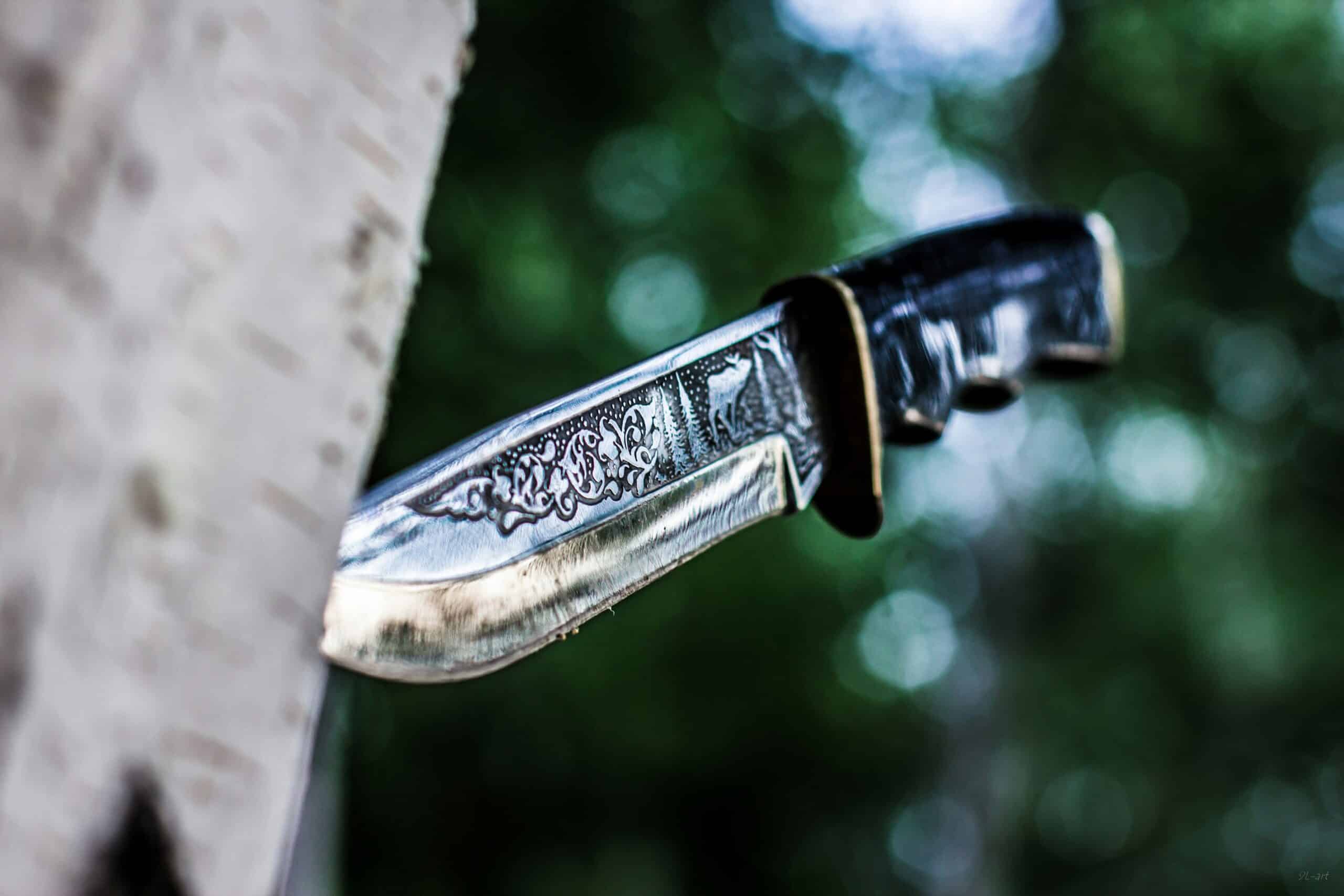
A machete clears green growth faster than any axe and splits wood far worse than one, which is the whole trade. The best machetes for bushcraft come in six blade patterns, and the deciding factor is whether your ground is vines and brush or standing deadwood. Blade weight distribution does more for cutting power than overall length does.
Steel choice sets the maintenance schedule. Softer carbon steel dulls sooner and sharpens in the field with a file, which suits a tool that hits dirt.
A machete sits alongside the other cutting tools rather than replacing them. Our guide to bushcraft axes covers the tool that handles everything a machete cannot.
Quick Verdict
A classic Latin pattern is the sensible default and the cheapest way to cover most clearing work. Bolo and kukri patterns move weight forward for heavier chopping, parang shapes handle wood better than green growth, and a short camp machete travels easily. Serrated and saw-backed models look versatile and usually compromise both edges.
Key Takeaways
- Blade shape decides what a machete is good at more than length or steel does.
- Forward weight bias adds chopping power and costs you control on fine work.
- Softer carbon steel dulls faster and sharpens in the field, which suits ground contact.
- A full-length blade is awkward in dense brush where a short one still swings.
- Handle grip and a lanyard matter more than they sound, since a wet handle is dangerous.
- Sheath quality is not a detail, because an unsheathed machete is the main injury risk.
How We Picked
We compared blade patterns rather than individual models, because lineups turn over while the shapes have been stable for generations. Each section covers one pattern and the work it suits.
We ranked patterns on four things: how well they cut green growth, how they handle wood, how controllable they are in tight cover, and how easily they sharpen in the field.
We excluded anything sold on steel hardness claims alone, and we have not stated blade lengths or hardness figures, since both vary by model and by maker.
1. Latin and Classic Straight Machetes
Why It Stands Out
The Latin pattern is the machete most of the world uses, with a long straight blade that widens slightly toward the tip. It clears grass, vines and light brush faster than anything else here.
It is also the cheapest pattern by a wide margin, which makes it the low-risk way to find out whether you want a machete at all.
Worth Knowing
The thin blade flexes and does not split wood well. Treat it as a clearing tool rather than a chopping tool.
Factory edges are usually rough and need work before first use. A file does the job, and our guide to survival knives covers the finer edge you carry alongside it.
Best for: Trail clearing, green growth, and anyone buying a first machete. Skip it if your work is mostly deadwood.
2. Bolo Machetes
Why It Stands Out
A bolo carries extra mass in a bellied section near the tip, which drives through thicker stems than a straight blade manages. That weight does the work for you on a heavy swing.
It also handles small-diameter wood better than a Latin pattern, which widens what one tool covers.
Worth Knowing
Forward weight costs control, and fine work like trimming or carving gets harder. Fatigue also arrives sooner on a long clearing session.
The wide tip catches in dense cover on the backswing. Gloves help here, and a decent pair is worth having for any of these tools.
Best for: Thicker brush and mixed green and woody growth. Skip it if you need precision more than power.
3. Kukri-Pattern Machetes
Why It Stands Out
The forward-angled kukri blade puts the impact point ahead of your hand, which turns wrist speed into chopping force. For its weight it is the hardest hitter in this group.
The angle also means you can chop with a shorter blade, which helps in cover where a long machete cannot swing.
Worth Knowing
The curve makes sharpening slower, since the bend has to be worked in sections. A round file or a rod suits it better than a flat stone.
Quality varies enormously in this pattern, and a poorly heat-treated kukri chips. Our guide to folding saws covers the tool that outperforms all of these on clean cuts.
Best for: Chopping power in a compact blade, and mixed camp tasks. Skip it if you dislike sharpening curved edges.
4. Parang and Golok Patterns
Why It Stands Out
A parang has a thicker spine and a convex grind, which lets it bite into wood rather than glancing off. In forest rather than grassland, that is the pattern that earns its keep.
The slight forward curve also keeps your knuckles clear of what you are cutting.
Worth Knowing
Thicker stock makes it heavier to carry and slower on soft green growth. It is a wood tool that clears brush, rather than the reverse.
Convex edges are sharpened differently from flat-ground blades, which catches people out. Batoning with one still asks for care, and our guide to fire starters covers the step after the wood is split.
Best for: Wooded terrain, shelter building, and processing small wood. Skip it for wide-open grass clearing.
5. Short Camp and Pack Machetes
Why It Stands Out
A short machete straps to a pack without catching on everything and still swings in dense cover. For hike-in trips, that is often the only version that actually gets carried.
Shorter blades are also more controllable, which matters for anyone new to swinging a large edge.
Worth Knowing
You lose reach and tip speed, so clearing takes longer. It is a compromise chosen deliberately rather than an upgrade.
Sheath retention matters more on a moving pack than on a belt. Pair it with a pack that has lash points rather than clipping it to a strap.
Best for: Backpacking, dense cover, and first-time machete users. Skip it if you clear large areas regularly.
6. Saw-Back and Serrated Machetes
Why It Stands Out
A saw spine promises two tools in one, and on soft green wood the serrations do cut. For clearing vines and roots, the extra bite is genuinely useful.
Some designs also use the serrated section as a hook for pulling cut growth clear.
Worth Knowing
The saw teeth on most of these cut poorly compared with a real saw, and the spine can no longer be used to push against with a palm. That loses a useful technique.
Serrated edges are also far harder to sharpen in the field. A dedicated saw plus a plain machete outperforms this combination, which is the usual verdict on multi-purpose blades.
Best for: Vines, roots, and anyone wanting one tool rather than two. Skip it if you already carry a folding saw.
Machetes for Bushcraft at a Glance
| Pattern | Green growth | Wood | Control | Best situation |
|---|---|---|---|---|
| Latin straight | Best | Poor | Good | Trail and grass clearing |
| Bolo | Good | Moderate | Moderate | Thicker brush |
| Kukri | Moderate | Good | Moderate | Compact chopping power |
| Parang and golok | Moderate | Best | Good | Wooded terrain |
| Short camp | Moderate | Moderate | Best | Backpacking, dense cover |
| Saw-back | Good on vines | Poor | Moderate | Roots and vines |
What to Look For in a Bushcraft Machete
What are you actually cutting?
Grass, vines and green stems call for a thin fast blade. Standing deadwood and shelter poles call for thickness and a convex grind.
Most people buy for the dramatic job and use it for the ordinary one. Buy for the ordinary one.
Where is the weight?
Forward weight chops harder, and neutral balance controls better. That single property separates a clearing tool from a chopping tool.
Hold one if you can, since balance is obvious in the hand and invisible in a listing. Total weight matters less than where it sits.
How does the handle feel wet?
A machete slips when hands are wet, and a slipping machete is the main way people get hurt with one. Textured grips and a lanyard hole both help.
Full-tang construction is worth insisting on for anything you plan to chop with. Handles that sit on a partial tang loosen with use.
What sheath comes with it?
Many machetes ship with a poor sheath or none at all, and that is not a small problem. An exposed blade in a pack is dangerous to you and everything else in there.
Retention matters as much as coverage, since a blade that slides out has failed. Budget for a better sheath if the included one is thin nylon.
How will you sharpen it in the field?
Softer carbon steels dull faster and come back with a file, which suits a tool that hits soil and grit. Harder steels hold longer and are slower to restore.
Curved and convex edges need different tools than flat ones. Carrying the right file is part of choosing the blade, and our guide to ferro rods covers the other kit that lives in the same pouch.
Machete vs Axe for Bushcraft
Where a machete wins
Green growth, vines, trail clearing, and anything wide and light. It covers ground fast and weighs less than an axe of comparable reach.
It is also cheaper, and losing or damaging one hurts less.
Where an axe wins
Splitting, felling, and driving stakes. Anything where mass and a short arc matter belongs to an axe, and a machete is genuinely poor at all of it.
Many people carry a machete and a folding saw instead of an axe, which covers most camp work at lower weight. Our guide to paracord covers the third item in that kit.
Common Machete Mistakes to Avoid
Swinging with no clear zone
A machete has a long arc and does not stop when it misses. Clear your own legs, your partner’s position, and the backswing path before every swing.
Chopping into the dirt
Ground contact destroys an edge faster than anything else. Cut above the soil line, or accept that you will be filing the edge back that evening.
Using it as a splitting axe
A thin blade bends or chips when driven into a round. Splitting wants mass and a wedge profile, which is an axe.
Carrying it loose in a pack
An unsheathed blade cuts through pack fabric, gear and hands. Sheath it properly, lash it outside where it cannot swing, and check your first aid kit before any trip with a large edge in it.
Related Reading
- Camping tarps cover the shelter a cleared site is usually made for.
- Emergency shelters cover the nights a machete is helping you prepare for.
- Choosing a campsite covers deciding where the clearing work is worth doing.
Frequently Asked Questions
What are the best machetes for bushcraft?
A Latin pattern is the best general starting point, because it clears green growth well and costs very little. Parang and kukri patterns are stronger choices in wooded terrain where you are processing small wood rather than clearing brush.
Is a machete better than an axe for bushcraft?
For clearing green growth, yes, and for splitting and felling, no. Many people carry a machete plus a folding saw instead of an axe, since that pairing covers most camp work at lower weight.
What machete length is best?
Longer blades clear faster in open ground, and shorter ones swing in dense cover and travel more easily. Backpackers usually land on a shorter blade because it is the one that actually gets carried.
What steel should a bushcraft machete be?
Carbon steel is traditional for a reason, since softer steel dulls sooner and comes back quickly with a file. That suits a tool that hits grit, while harder steels hold an edge longer and take more work to restore.
Can you baton with a machete?
Thick parang and golok patterns tolerate it, and thin Latin blades often do not. If splitting wood is a regular need, an axe or a saw is the right tool rather than a machete.
How do you sharpen a machete in the field?
A coarse file is the traditional answer and suits softer carbon steel well. Curved blades need a round file or a rod, and convex grinds are worked differently again from flat ones.
Are saw-back machetes worth it?
Rarely. The saw teeth underperform a real folding saw, and the serrated spine removes the flat surface you would otherwise push against with a palm.
Do machetes come sharp?
Most arrive with a rough factory edge that needs real work before first use. Budgeting time to sharpen a new machete is part of buying one.
