
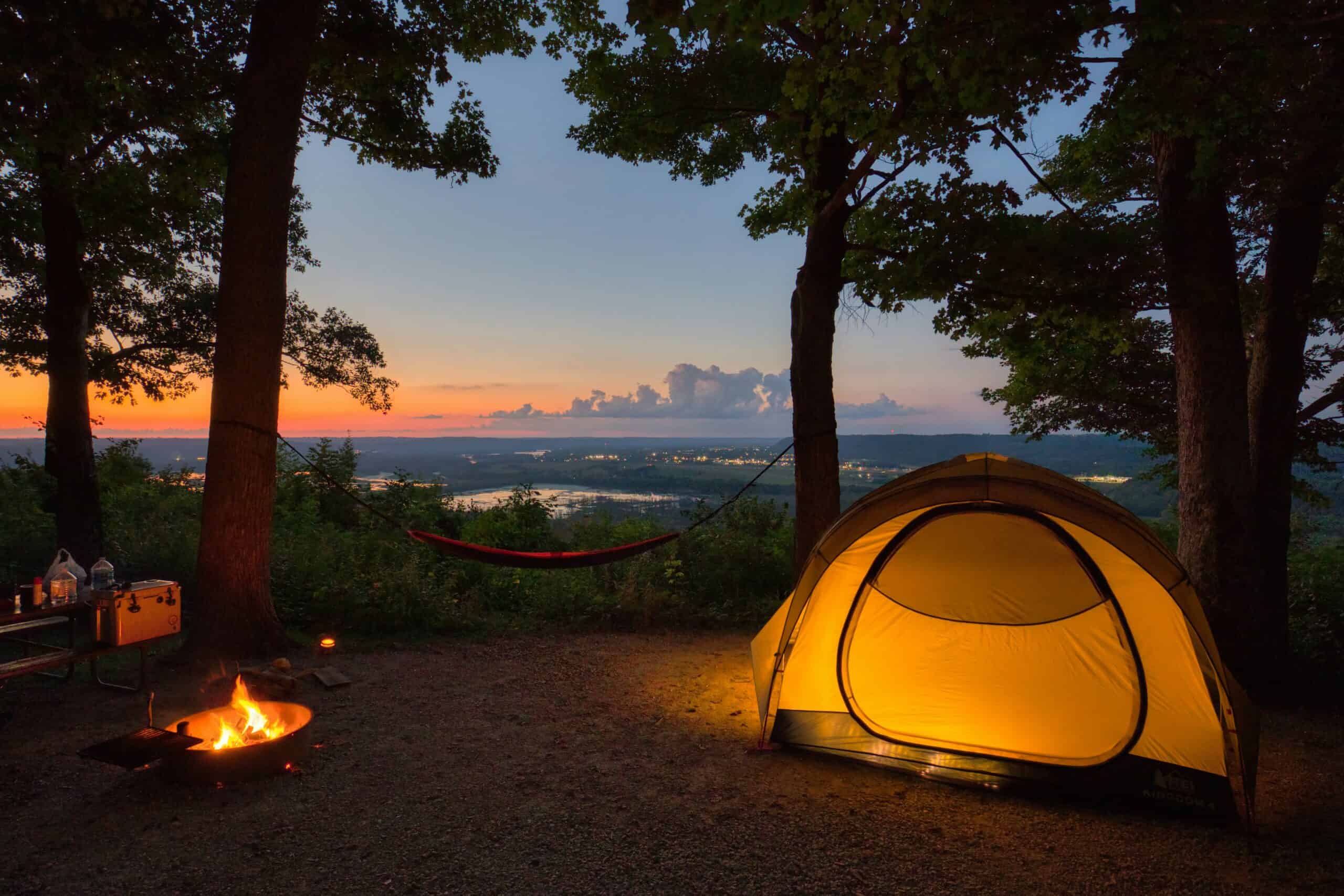
Choose a campsite by finding flat, durable ground that sits slightly above its surroundings, clear of dead limbs overhead, set back from water, and partly sheltered from wind. Knowing how to choose a campsite means checking those signals in a fixed order. Ground decides comfort, drainage decides dryness, and the trees overhead decide safety.
Most miserable nights outdoors trace back to a rushed choice in fading light. A spot that looks fine at dusk can become a puddle by midnight. Damp mornings start here too, which is why a soaked tent interior often points back to site choice.
Quick Answer
Walk the area first and look for flat, durable ground that sits slightly above everything around it. Check overhead for dead branches, then trace where rain would run underfoot. Move back from water, take partial wind shelter, and face the door toward morning sun for faster drying.
Key Takeaways
- Low ground gathers both runoff and cold night air, so a slight rise sleeps drier and warmer.
- Dead limbs overhead are the one hazard that cannot be fixed once the tent is up.
- Camping well back from lakes and streams cuts condensation and protects fragile bank soil.
- Gentle airflow clears damp air, while constant exposed wind wears down sleep.
- Developed campgrounds hand you a graded pad, so the work becomes picking the right pad.
- Rock, gravel, dry grass, and packed mineral soil recover fastest after a night of use.
Step by Step: Evaluating a Campsite When You Walk Up to It
Run the same sequence at every candidate site, starting overhead and ending at ground level. Early checks rule a site out before you waste effort on the rest.
- Look up before anything else. Scan for dead limbs, split branches, and trees that lean. If the overhead picture fails, walk away.
- Read the slope. Stand still and find which way the land tilts. Aim for ground that feels flat but sits above the terrain nearby.
- Trace where water would go. Look for shallow channels, scoured gravel, and lines of stranded twigs. Those marks show the path runoff already takes.
- Check the surface. Press a boot down and feel for rock, gravel, packed soil, or soft duff. Durable ground springs back, while plant cover holds the dent.
- Step back from water and trails. Move well away from the bank and off any obvious walking route. Distance protects the shoreline and your privacy.
- Feel the wind. Note its direction and whether trees, boulders, or a low bank break it. Shelter should slow gusts without killing airflow.
- Find the morning sun. Work out which side clears the ridge or canopy first. Wet gear dries fastest on that side.
- Lie down before committing. Stretch out on the exact footprint and feel for roots, stones, and hidden tilt. Any lump feels twice as large at night.
Why Is the Low Spot the Worst Place to Pitch?
Water runs downhill and pools in the lowest dip available. A hollow that feels sheltered is really a basin waiting to fill. Rain does not need to be heavy for water to gather there.
Read the surface for evidence rather than guessing. Silt fans, gravel ripples, and grass combed flat in one direction all mark a runoff channel. A faint debris line around bare soil shows how high water stood before.
Cold air behaves the same way. It is denser than warm air, so it drains downhill at night and settles in valley bottoms, dry creek beds, and open meadow centers. A rise of a few steps lifts the tent out of that chilled pool.
Trenching around a tent is now discouraged nearly everywhere. Digging scars the ground and pushes the problem downhill. Better ground solves the same issue with no damage.
Widowmakers: What to Check Overhead
A widowmaker is a dead or broken limb still hanging in a tree. It is the most serious hazard at any wooded site. Those branches drop without warning, often long after the wind that loosened them.
Look for gray, bark-free limbs and branches snagged in the canopy. Leaning trunks, exposed roots, and burned or beetle-killed stands all raise the risk. Standing dead trees deserve a wide berth.
Check uphill as well. Loose rock and undercut banks can shift during heavy rain. A flat pad means nothing beneath an unstable slope.
How Far From Water Should a Campsite Be?
Camping back from lakes and streams solves two problems at once. The usual published guidance is roughly two hundred feet from any water source, often described as about seventy adult steps. That distance keeps waste and food residue out of the water. Our portable camping toilet guide covers the sanitation side of site choice.
Comfort improves at the same time. Air near open water holds more moisture, and that moisture condenses on cool tent walls overnight. Moving uphill and back puts the shelter in drier air.
Shorelines are fragile as well. Bank plants hold soil in place and strip away fast under repeated use. Durable ground further back protects the feature everyone came to see.
Wind Exposure Versus Shelter
Some airflow across a site is genuinely useful. Moving air carries off the damp that a sleeping body produces. Enclosed, dead-calm hollows produce the wettest tent interiors.
Natural windbreaks work best upwind and slightly to one side. Shrubs, a boulder, a low bank, or a band of trees slow gusts without trapping air. Ridgelines, saddles, and open lakeshores funnel wind and are worth avoiding.
Orientation carries the rest of the load. Point the lowest, narrowest end of the shelter into the prevailing wind. Exposed ground also demands more anchoring, so a full set of reliable stakes and guylines makes a marginal site workable.
Morning Sun and Durable Surfaces
Morning sun does more work than most campers expect. A site that clears the ridge early dries dew off the fly before packing. Dry fabric means a lighter load and no mildew.
Durable surfaces are the other half of a sound choice. Rock, gravel above the flood line, dry grass, packed mineral soil, and established pads recover quickly. Living plant mats, moss, wet meadow, and desert soil crust do not.
Shelter size shapes how many sites stay open to you. A compact footprint fits small durable patches that a larger shelter cannot use, which is one argument for a lightweight two person backpacking tent. Smaller pitches also trample less ground.
Developed Campground Sites Versus Dispersed Backcountry Camping
A developed campground has already made the hard decisions for you. Grading, drainage, and hazard tree removal are handled by staff. The work shifts to choosing the best numbered pad in the loop.
Favor pads on the outer edge, uphill of the road, and away from restroom traffic. Check which way the pad drains and whether the tent area is gravel or worn dirt. Sight lines to neighbors matter as much as the pad itself.
Dispersed camping hands every judgment back to you. Use previously camped ground where it exists, since concentrating impact beats starting a new scar. Rules also differ, and many areas set minimum distances from water, trails, and roads.
Recommended Reading
Once the ground is chosen the rest of the pitch gets easier, and a well pitched camping tarp covers cooking and gear when rain settles in. Good light makes a late arrival far safer, so a bright camp lantern earns its weight after dark. Site selection also shifts with your sleep system, which the comparison of hammock camping against tent camping lays out in detail.
Frequently Asked Questions About How to Choose a Campsite
What is the first thing to check when learning how to choose a campsite?
Look up before anything else. Dead limbs and standing dead trees are the one hazard you cannot correct once the tent is pitched. Clear the overhead check, then work down through slope, drainage, surface durability, distance from water, and wind exposure in that order.
Is flat ground always the best choice?
Not by itself. Perfectly flat ground is often the lowest ground, so it gathers both runoff and cold night air. Aim instead for ground that feels level underfoot but sits a little above the terrain around it, then sleep with your head at the high end.
How do you tell whether a site will flood before it rains?
Read the ground for evidence that water has already passed through. Shallow channels, fanned silt, combed grass, and small lines of stranded twigs all mark drainage paths. A faint debris ring around bare soil shows the old waterline, and sites inside it fill again.
Why does camping near a lake or river make the tent wet inside?
Air directly above open water carries much more moisture than air a short distance away. At night the tent surface cools below that damp air, so water condenses on the fabric. Moving uphill and back from the bank puts the shelter in drier, better moving air.
What makes a surface durable enough to camp on?
Durable ground recovers quickly after a night of pressure. Rock, gravel, sand above the high water line, dry grass, packed mineral soil, and established pads all qualify. Living plant mats, moss, saturated meadow, and desert soil crust do not, since one night flattens seasons of growth.
Should a campsite be sheltered from wind or open to it?
Aim for partial shelter rather than either extreme. Gentle airflow carries off overnight moisture and keeps a shelter drier inside. Constant exposed wind disturbs sleep and strains fabric, so a boulder, low bank, or band of trees upwind gives the right balance.
How is picking a backcountry site different from picking a campground site?
A campground pad is already graded, drained, and cleared of hazard trees, so the choice becomes which pad to request. Position in the loop, distance from roads, and neighbor sight lines matter most. Backcountry camping returns every judgment to you, including overhead hazards, slope, and local rules.
