
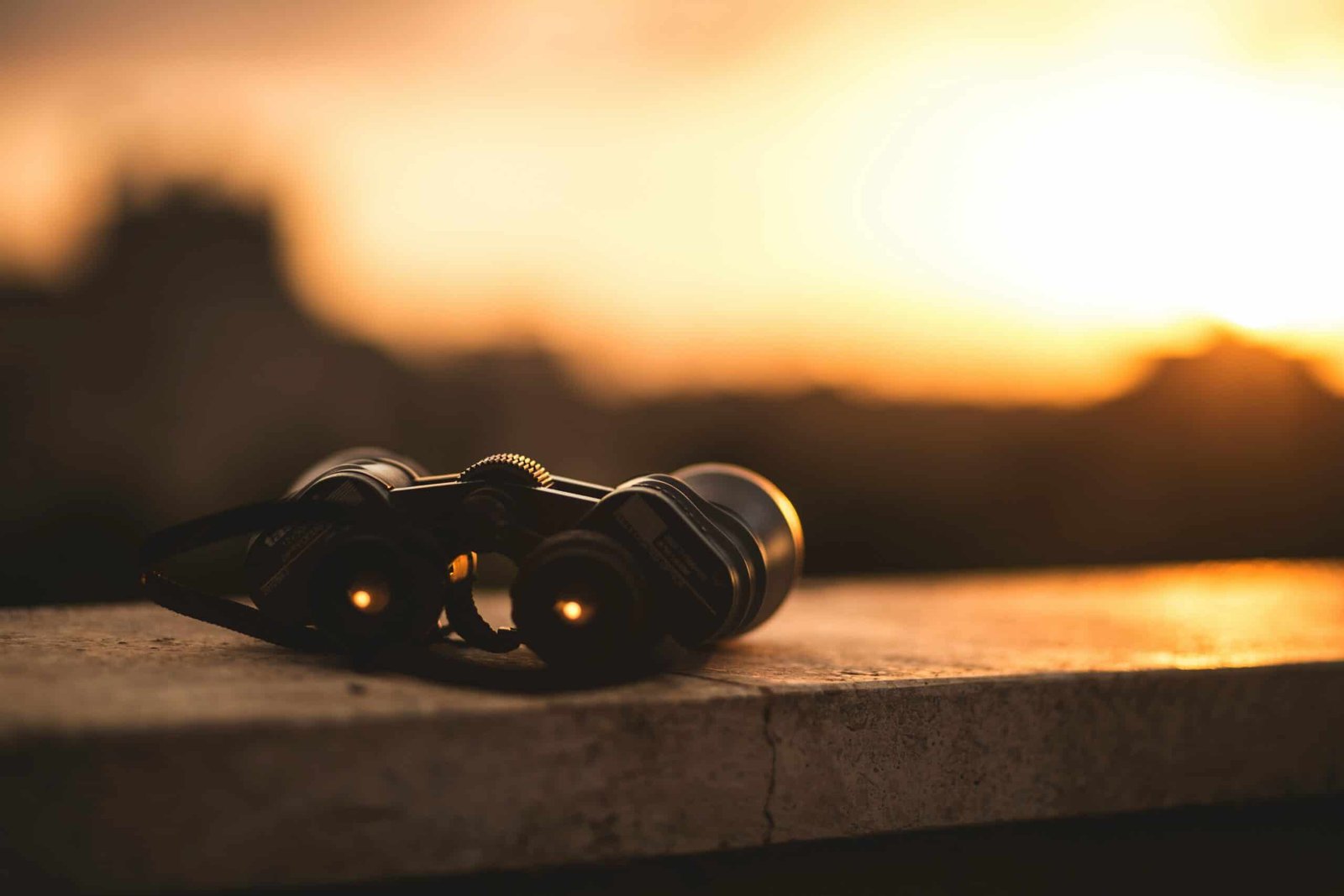
Binoculars for hiking are chosen on weight and close focus rather than on magnification, because a pair heavy enough to leave in the car protects no wildlife sightings at all. An 8×32 that lives around your neck beats a 10×42 that stays at the trailhead, and the honest verdict is that most hikers should buy the smaller pair.
Buy an 8×32 roof prism pair with a close focus distance under about six feet and a chest harness, and spend whatever is left on glass quality rather than on more magnification. Hunting optics are built around a different problem, and hunting binoculars covers that case properly.
Hiking Binoculars at a Glance
| Format | Weight | Low Light | Best For |
|---|---|---|---|
| 8×32 roof prism | Light | Adequate | The all-round hiking choice |
| 8×42 roof prism | Moderate | Strong | Dawn and dusk wildlife |
| 10×42 roof prism | Heavier | Strong | Open country and distance |
| 8×25 compact | Lightest | Weak | Pocket carry, bright conditions |
| 10×25 compact | Lightest | Weak | Distance with no weight budget |
| Monocular | Minimal | Weak | Occasional glances only |
Key Takeaways
- 8x is steadier in the hand than 10x, which matters more than the extra reach.
- Close focus is the specification hikers ignore and birders buy on.
- A 32mm objective saves real weight over 42mm and costs some low-light performance.
- Wider field of view makes finding a moving animal much easier.
- A harness beats a neck strap on any hike longer than an hour.
- Glass quality is where the money goes once the format is settled.
How We Picked
We sorted these by format rather than by brand, because magnification and objective size together decide weight, brightness and steadiness.
Then we weighted the two specifications that matter on a trail and rarely lead a listing: carried weight and close focus distance.
We have not compared these side by side or measured optical performance, so nothing here is presented as a result from our own testing. Optical quality within a format varies far more by price than the numbers suggest.
1. An 8×32 Roof Prism Pair, Best Overall
Why It Stands Out
This is the format that gets carried. It is noticeably lighter than a 42mm pair, steady at 8x, and bright enough for everything except deep dusk.
Roof prism bodies are also slimmer front to back, so they sit flatter against the chest and swing less when you walk.
Worth Knowing
You give up low-light performance against a 42mm pair, and that gap widens at dawn and dusk when animals move most. It is the central trade in the category.
Roof prisms also need better coatings than porro prisms to reach the same brightness, so cheap roof pairs disappoint more than cheap porro ones.
This suits almost every hiker and day walker. Skip it if your wildlife watching is mostly at first and last light. Best for: the pair you will actually bring.
2. An 8×42 Pair, Best for Dawn and Dusk
Why It Stands Out
A larger objective gathers more light, which is the difference between identifying an animal at dusk and watching a silhouette. Most wildlife activity sits at exactly those hours.
At 8x the image also stays steady in the hand, so you get the brightness without the shake that comes with higher power.
Worth Knowing
The weight is the cost, and it is felt on a long day rather than in the shop. This is the format most often bought and then left behind.
Larger bodies also need a harness rather than a strap to carry comfortably.
This suits dedicated wildlife watching and short approaches. Skip it if you count ounces. Best for: seeing clearly at the hours animals are out.
3. A Close-Focus Birding Pair, Best for Detail Nearby
Why It Stands Out
Pairs built for birding focus much closer than general-purpose optics, which turns a warbler six feet away in a bush from a blur into a bird. Most wildlife encounters on a trail are close, not distant.
Close focus also makes binoculars useful for butterflies, dragonflies and anything else small and nearby.
Worth Knowing
Close focus distance is often buried in the specifications or omitted entirely, and it is the single most useful number for this use. Look for it before anything else.
Birding pairs tend to prioritize field of view and close focus over compactness, so they are rarely the lightest option.
This suits forest trails, birding and anyone watching small things. Skip it for open-country glassing at range. Best for: the close encounters that actually happen on trails.
4. A Pocket Compact Pair, Best Ultralight Option
Why It Stands Out
A 25mm compact disappears into a hip belt pocket, which means it comes on trips where a full pair would be left at home. Something beats nothing by a wide margin.
These are also cheap enough to treat casually rather than protecting them.
Worth Knowing
Small objectives mean a dim image in anything other than good light, and the narrow exit pupil makes the view fussy to line up. Extended watching is tiring.
Double-hinge compacts also have a narrow field of view, which makes finding a moving animal harder.
This suits ultralight trips and occasional use in bright conditions. Skip it for serious watching. Best for: fitting optics into a trip with no weight budget.
5. A Binocular Chest Harness, Best Accessory
Why It Stands Out
A harness takes the weight off your neck and stops the binoculars swinging into your chest on descents. It is the cheapest upgrade that changes whether you carry them.
It also keeps them high and accessible rather than sliding into the way of a hip belt.
Worth Knowing
Harness straps compete for space with pack shoulder straps and sternum straps, and some combinations sit badly together.
Chest cases protect better but slow you down, which matters when an animal is about to move. GPS mounts and lanyards run into the same accessibility trade.
This suits anyone carrying a 42mm pair, and most people carrying a 32mm one. Skip it for pocket compacts. Best for: making a real pair comfortable to carry all day.
6. A Monocular, Best Minimal Choice
Why It Stands Out
Half the optics means half the weight and half the bulk, which suits someone who wants to identify a distant trail marker or a bird once an hour. It fits in a shirt pocket.
Many also focus very close, which makes them surprisingly useful for looking at small things.
Worth Knowing
One eye is tiring and gives no depth, so extended watching is unpleasant compared with binoculars. Finding a moving target with one eye is also harder.
For glassing a hillside properly a spotting scope is the right tool instead, which spotting scopes covers.
This suits occasional glances and absolute minimum weight. Skip it if you expect to watch anything for long. Best for: a quick look without carrying a pair.
What to Look For
Weight before anything optical
A pair you leave behind has no optical qualities at all. Decide what you will carry on a long day first, then pick the best glass within that weight.
Close focus distance
Most trail wildlife is near rather than far, and a pair that cannot focus closer than twenty feet is useless on a bird in a nearby bush. This is the number that separates a birding pair from a general one.
Field of view
A wider view makes it far easier to get a moving animal into the frame and keep it there. Lower magnification generally buys you this for free.
Weather sealing
Fog inside the barrels ends a pair’s useful life, so nitrogen-purged and sealed bodies are worth the premium on anything that goes out in real weather.
Eight Power Against Ten Power
8x is steadier and wider
Hand shake is multiplied along with the image, so 8x gives a calmer view and a wider field. For watching animals that move, both of those beat extra reach.
10x suits open ground
Where sightlines run for a long way and you can brace against a pole or a rock, the extra magnification earns its place. In forest it mostly costs you field of view, and what magnification to choose works through the same decision for hunting.
What Trips People Up
Buying magnification first
The biggest number on the box is the least useful one for trail use. Weight, close focus and field of view all affect what you actually see more than the power does.
Carrying them on the neck strap that came in the box
Factory straps are thin and put all the weight on your neck. Replacing one is the first thing most people do after a long day.
Packing them away inside the pack
Optics in a pack body get used roughly never, because wildlife does not wait while you stop and unpack. If they are not on your chest they are decoration.
Expecting a hunting pair to suit forest watching
Hunting optics are built for low light at distance in open country, which is a different problem from identifying a bird in a bush eight feet away. Both are valid and they are not interchangeable.
Fitting Them Into the Rest of the Kit
They compete with everything on the chest
A harness, a phone, a GPS and a hydration hose all want the same real estate, so decide what lives where before a trip rather than on it. Hiking daypacks covers the carrying side.
Poles and optics conflict
Both hands are busy with poles, so raising binoculars means stowing or dropping them first. Wrist straps you can release quickly help, as trekking poles touches on.
Navigation stays a separate job
Binoculars help you identify a distant feature, not locate yourself relative to it. Handheld GPS units and hiking watches cover that.
Low light cuts both ways
The hours when animals are most active are also the hours you need a light to get back. Hiking flashlights cover the return trip.
Worth reading next: sunglasses for hiking, since glare management affects what you can pick out at distance.
Hiking Binocular FAQ
What are the best binoculars for hiking and wildlife watching
An 8×32 roof prism pair with close focus is the all-round answer, because it is light enough to carry and steady enough to use. Go to 8×42 if you watch at dawn and dusk, and to a pocket compact if weight is the binding constraint.
Is 8x or 10x better for hiking
8x for most people, since it is steadier in the hand and gives a wider field of view, which makes finding and following a moving animal much easier. 10x earns its place in open country where you can brace.
What does close focus mean and why does it matter
It is the shortest distance at which a pair can bring something into focus. Most trail wildlife is close rather than far, so a pair that cannot focus inside a few feet is no use on a bird in a nearby bush.
Are hunting binoculars good for hiking
They are excellent optics built for a different problem, namely low light at distance across open ground. They tend to be heavier and to focus less closely, which are the two things that matter most on a trail.
Is 32mm bright enough
For daylight and most of the shoulder hours, yes. The gap against 42mm shows up specifically at dawn, dusk and under heavy forest canopy, which is also when animals move most.
Do I need a harness
On anything larger than a pocket compact it makes a real difference, because it moves the weight off your neck and stops the pair swinging on descents. It is the cheapest worthwhile accessory in the category.
Are monoculars worth it
For occasional glances at minimum weight, yes. For watching anything for more than a few seconds they are tiring and offer no depth perception, so most people prefer a compact pair instead.
How much should I spend
Settle the format first, then buy the best glass within that size and weight. Coatings and glass quality are where price shows up, and the difference is most visible at the edges of the image and in poor light.
