
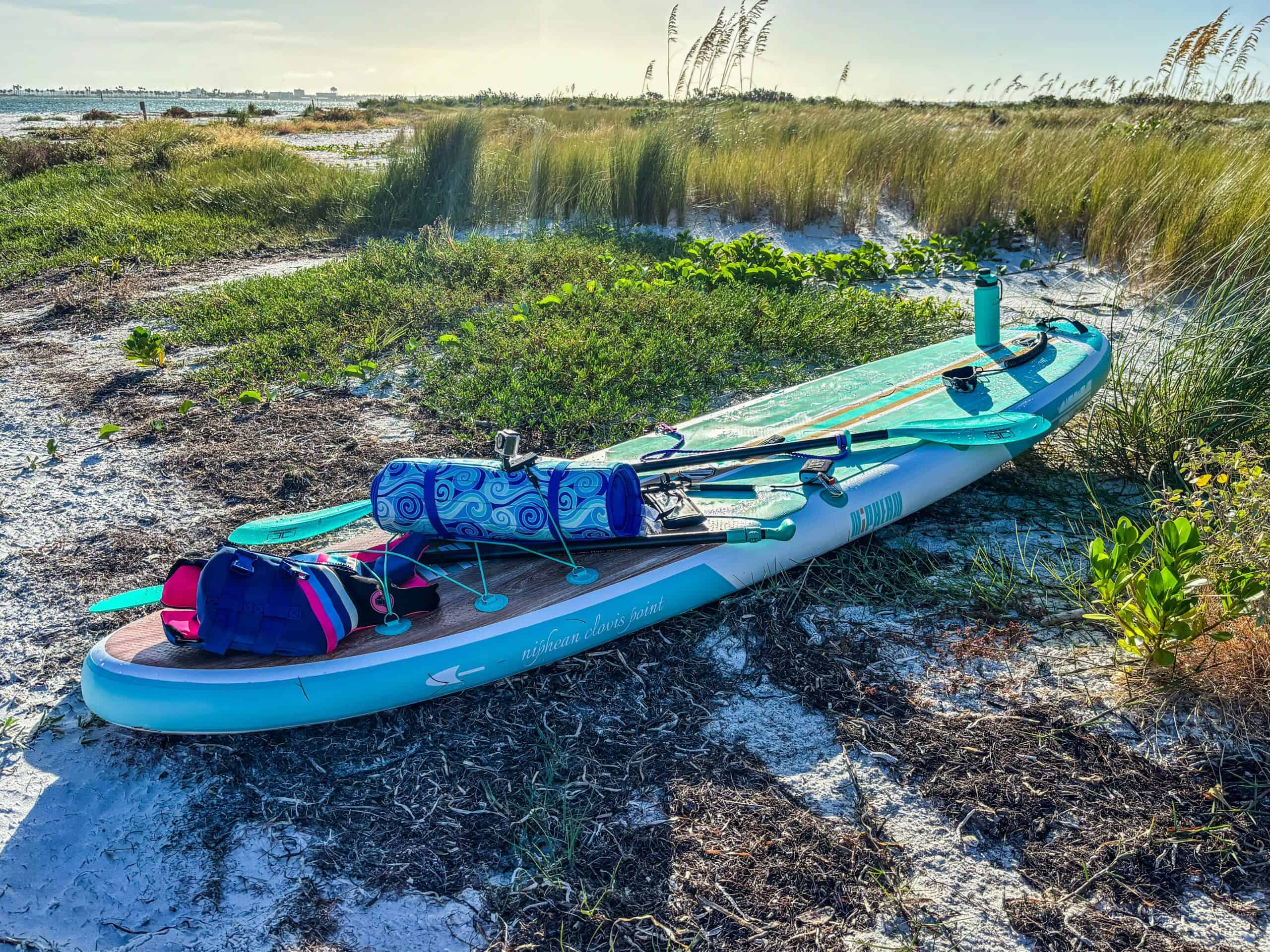
An inflatable paddle board rolls into a bag the size of a large rucksack and inflates to something you can stand on. What decides whether it feels solid underfoot is construction and pressure, not the price tag. A board built with dense drop-stitch fiber and inflated to its full rated pressure flexes far less than the same board at half pressure.
Volume is the other number that matters, and it maps to your weight plus whatever you carry. Underestimate it and the board sits low, drags, and turns every paddle stroke into work. That mistake is more common than choosing the wrong shape.
Quick Verdict
Buy an all-round board around ten to eleven feet for general use, sized by volume to your loaded weight. Inflate to the full rated pressure every time, since underinflation is what makes an inflatable feel like a pool toy. Add a leash and a buoyancy aid before anything else.
Key Takeaways
- Volume should exceed your body weight plus gear with margin
- Full rated pressure is what makes an inflatable feel rigid
- Drop-stitch construction quality varies more than the outer material does
- All-round shapes suit beginners; touring shapes trade turning for glide
- Wider boards feel stable and paddle slower
- A leash is safety equipment rather than an accessory
How We Picked
Construction came first. Single-layer boards are lighter and flex more, while dual-layer or fusion construction resists bending under a paddler’s weight. The difference shows in the middle of the board when someone stands there, which is where every inflatable is weakest.
Pump quality came second. A board rated to a high pressure is only rigid if you can reach that pressure, and a poor pump makes the last few PSI genuinely hard work. Dual-action pumps and electric options were weighted accordingly.
Fin system settled the rest. Removable fins pack flat and get lost. Fixed fins survive but complicate rolling the board. Sliding-lock systems that hold without a screw split the difference and vary in how well they stay put.
1. The All-Round Board
Why It Stands Out
Around ten to eleven feet with a rounded nose and a moderate width, the all-round shape handles flat water, small chop, and a passenger sitting on the front. For a first board and for most recreational paddling, this is the shape that fits the widest range of days.
Worth Knowing
All-round means average at everything. It glides less efficiently than a touring board over distance and turns less sharply than a surf shape. Nobody regrets buying one, and people who paddle far eventually want something longer.
Right for beginners, mixed conditions, and general recreation. Skip it if you already know you want distance or surf.
2. The Touring Board
Why It Stands Out
Longer, narrower, and with a pointed nose that cuts water rather than pushing it. Over a few miles the difference in effort is substantial, and a touring board tracks straighter so you correct your line less often.
Worth Knowing
Narrower means less stable, and a beginner on a touring board spends the first sessions in the water. It also turns slowly, which matters on a winding river. Length makes it awkward to carry and store even deflated.
Right for distance paddling and open water. Skip it as a first board.
3. The Wide Stability Board
Why It Stands Out
Extra width gives a platform that feels solid for nervous beginners, larger paddlers, and anyone bringing a dog or a child aboard. Yoga on the water and fishing from a board both want this shape.
Worth Knowing
Width costs speed and makes the paddle stroke wider, which tires shoulders over distance. A very wide board also catches wind. If stability is a confidence issue rather than a load issue, most people outgrow the need within a season.
Right for beginners, larger paddlers, and carrying passengers. Skip it if you paddle distance.
4. The Fishing Paddle Board
Why It Stands Out
Wide, high volume, and fitted with mounting points for rod holders, a cooler, and a seat. Fishing from a board reaches water a boat cannot and costs a fraction of even a small kayak.
Worth Knowing
Standing and casting takes practice, and most people end up sitting for the fishing and standing for the travel. Gear adds weight, so the volume rating needs to cover you plus a full tackle load, and options for carrying that sit in dry bag choices.
Right for calm water fishing and light gear. Skip it if you carry substantial tackle.
5. The Compact Travel Board
Why It Stands Out
Boards designed to pack small enough for checked luggage or a small car boot make paddling possible on trips where a rigid board never would be. Rolled tight, a travel board and pump fit in a wheeled bag.
Worth Knowing
Packing small usually means shorter, thinner, or lighter construction, and each of those costs rigidity. Read the pressure rating and construction rather than the packed dimensions alone, since a board that packs beautifully and flexes underfoot is a poor trade.
Right for travel and small storage spaces. Skip it if the board lives in a garage anyway.
6. The Electric Pump and Accessory Kit
Why It Stands Out
Reaching full pressure by hand takes several hundred strokes and real effort in the last stretch. An electric pump running off a car socket removes that entirely, and reaching full pressure is what makes the board rigid.
Worth Knowing
Electric pumps need power, which ties you to the car park. Many people carry a manual pump as backup for that reason. Check the pump reaches the board’s rated pressure rather than stopping short, since plenty top out below what stiff boards need.
Right for anyone paddling often from a vehicle. Skip it if you carry the board any distance from the car.
Inflatable Paddle Boards at a Glance
| Shape | Typical length | Stability | Best for |
|---|---|---|---|
| All-round | 10 to 11 feet | Good | First board, mixed use |
| Touring | 12 feet and up | Moderate | Distance and open water |
| Wide stability | 10 to 11 feet | Highest | Beginners, passengers |
| Fishing | 11 feet plus | High | Calm water angling |
| Compact travel | Varies | Varies | Air travel, small storage |
| Electric pump | Not applicable | Not applicable | Reaching full pressure |
How to Size an Inflatable Board
Check the volume against your loaded weight
Volume in liters should comfortably exceed your body weight plus anything you carry. A board loaded to its limit floats low, drags, and turns paddling into work. Buying with margin costs nothing in performance.
Read the pressure rating, then reach it
Boards rated to higher pressures feel considerably more rigid, and the rating only helps if you inflate to it. Most flex complaints about inflatable boards come from underinflation rather than construction.
Match width to your confidence
Wider feels stable and paddles slower. Narrower feels tippy at first and rewards you once balance improves. Beginners are usually happier a little wider than the specifications suggest.
Consider where it lives and travels
The whole reason to choose inflatable is storage and transport. If the board lives in a garage and goes on a roof rack, a rigid board offers more performance for the money, so be honest about how you will use it.
Inflatable Versus Rigid Boards
What inflatable gives you
Storage in a cupboard, transport in a car boot, and durability against rocks and docks that would gouge a rigid board. For most recreational paddlers the practical advantages outweigh the performance gap.
What rigid gives you
Better glide, sharper turning, and no pump. A rigid board of the same length is faster over distance and more responsive. It also needs somewhere to live and a way to carry it.
Common Paddle Board Mistakes to Avoid
Underinflating
This is the single most common complaint and the easiest to fix. A board at two thirds of its rated pressure bends under your weight and feels unstable, and the same board at full pressure feels like a different product.
Paddling without a leash
A board blows away faster than you can swim after it. A leash keeps your flotation attached to you, which is the reason it counts as safety equipment rather than a convenience.
Leaving it inflated in the sun
Heat raises internal pressure, and a board left inflated on a hot beach can exceed its rating. Deflate slightly or put it in shade rather than leaving it baking.
Ignoring wind direction
A paddle board catches wind like a sail, and an offshore breeze carries you out faster than you paddle back. Check conditions before launching, and see buoyancy aid options for what to wear regardless.
Recommended Reading
- paddle selection and sizing
- buoyancy aids for paddling
- keeping gear dry on the water
- transporting boards and boats
- how paddle craft compare
- anchoring on the water
- kayaks as an alternative platform
Frequently Asked Questions
What size paddle board do I need?
Check the volume rating against your body weight plus any gear, with margin above it. A board loaded near its limit sits low in the water and drags, which makes every stroke harder than it should be.
How rigid are inflatable boards really?
At full rated pressure with quality drop-stitch construction, rigid enough that most recreational paddlers notice no problem. Most complaints about flex trace back to underinflation rather than the board itself.
What pressure should I inflate to?
The board’s rated maximum, which is printed near the valve. Stopping short is the most common mistake, and the last few PSI are what deliver the stiffness the construction is capable of.
Do I need an electric pump?
No, though reaching full pressure by hand takes effort, and effort is why people stop short. If you paddle often from a car, an electric pump removes the reason people underinflate.
Is an inflatable board good for beginners?
Yes, and often better than rigid. Falling onto an inflatable hurts less, the boards shrug off knocks against rocks and docks, and an all-round shape at a stable width forgives early balance mistakes.
Can I fish from a paddle board?
From a wide high-volume board on calm water, yes. Standing to cast takes practice, and gear weight counts toward the volume rating, so leave headroom for tackle and a cooler.
