
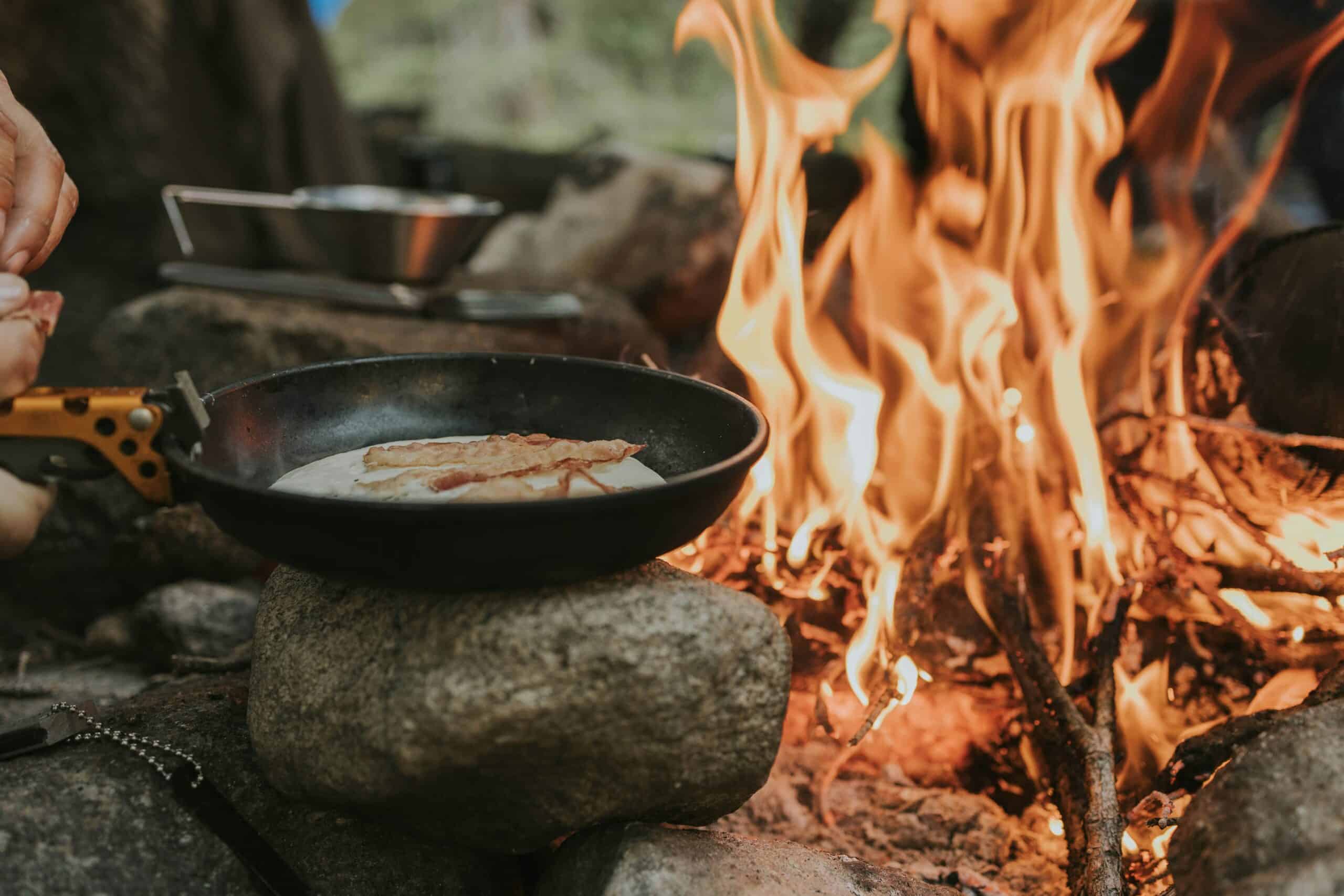
Camp cookware gets chosen on two numbers: how many people eat, and how the set packs. A backpacker cooking for one wants a pot that holds a stove and a canister inside it. A family car camping wants pans big enough to cook a real meal, and nesting matters less when a car carries them.
Material sits underneath both decisions. Aluminum heats fast and dents. Stainless resists abuse and heats unevenly. Titanium weighs almost nothing and costs several times either. None of them is best in general, and each one is clearly best for a particular kind of trip.
Quick Verdict
Choose a hard-anodized aluminum set for car camping with two to four people. Choose a titanium or thin aluminum pot for solo backpacking where every ounce counts. Check that the set nests around your stove and fuel before buying, because volume in a pack matters more than the number of pieces.
Key Takeaways
- Match pot volume to group size rather than buying the largest set available
- Nesting around a stove and fuel canister saves more pack space than a smaller pot does
- Aluminum heats fast and dents; stainless survives more and heats unevenly
- Titanium saves weight and costs several times aluminum for the same volume
- Folding or removable handles decide whether a set packs flat
- Non-stick coatings fail early over a camp stove flame
How We Picked
Packed volume came first, because that is what a pack actually measures. A set that nests a stove, a canister, and a lighter inside the pot occupies one space rather than three, and that beats a slightly lighter set that packs loose.
Handle design came second. Folding handles that lock hold a full pot without wobbling, and handles that only half-lock spill dinner. Removable grippers save weight and require a free hand at the moment you least want one.
Heat behavior settled the rest. Thin aluminum scorches food over a concentrated flame, and a heavier base spreads it. For anyone cooking more than boiling water, base thickness matters more than the material name on the box.
1. The Hard-Anodized Aluminum Set
Why It Stands Out
Hard anodizing gives aluminum a tougher surface that resists scratching and cleans more easily than bare metal. The heat spread suits real cooking rather than boiling alone, and the price sits well below titanium for a set that will last years of car camping.
Worth Knowing
Anodized surfaces still scratch under metal utensils, and once through, the aluminum underneath discolours and pits. Bring a wooden or silicone spoon. These sets also weigh more than a backpacker wants, which is the trade for durability.
Right for car camping and groups of two to four. Skip it for solo backpacking where weight rules.
2. The Titanium Backpacking Pot
Why It Stands Out
Titanium weighs a fraction of aluminum for the same volume and shrugs off dents that would deform a thin aluminum pot. For a solo hiker counting grams over a multi-day trip, that difference is real rather than theoretical.
Worth Knowing
Titanium conducts heat poorly, so it develops hot spots directly over the flame and scorches anything that is not water. It also costs several times an aluminum pot of the same size. For boiling water and rehydrating meals it is excellent, and for frying it is the wrong metal. Cooking draws from the same supply as drinking, and our water container picks cover carrying enough.
Right for solo backpacking and boil-only cooking. Skip it if you actually cook rather than rehydrate.
3. The Stainless Steel Set
Why It Stands Out
Stainless takes abuse that dents aluminum and scratches anodizing. It handles metal utensils, scrubbing, and open fire, and a stainless set lasts long enough to outlive several aluminum ones.
Worth Knowing
It is the heaviest option and it heats unevenly without a thick or clad base. Thin stainless burns food in a ring over the burner. For car camping where weight is irrelevant and the set gets rough treatment, the durability wins.
Right for car camping, group cooking, and open fires. Skip it for anything you carry on your back.
4. The Solo Nesting Cook System
Why It Stands Out
Integrated systems combine a pot, a lid that doubles as a strainer, a mug, and space for a stove and canister inside. Everything travels as one unit, and the pieces are designed to fit rather than happening to.
Worth Knowing
Integration means you are locked to that stove size. A system built around one canister diameter will not close around a different one. Confirm your stove nests before buying, or expect to carry it separately and lose the advantage.
Right for solo hikers who want one packed unit. Skip it if you already own a stove that will not fit.
5. The Family Car Camping Set
Why It Stands Out
Larger pots, a proper frying pan, plates, bowls, and utensils for four or more, packed in a carry bag. When a car does the carrying, having enough pan area to cook a real meal beats saving grams nobody notices. Whatever the set, cleaning it at camp takes a different approach than a kitchen sink.
Worth Knowing
Big sets include pieces you never use, and the plates and cups are often the weakest items. Check what the set actually contains against what you cook, since a set advertised as twenty pieces may be four useful ones and sixteen fillers.
Right for family and group car camping. Skip it if two people cook simple meals.
6. The Cast Iron Camp Set
Why It Stands Out
Cast iron over a fire does things no lightweight pan does. Even heat, a genuine sear, and a surface that improves with use. For camp cooking built around a fire rather than a stove, a skillet and a Dutch oven cover most of what you would cook at home.
Worth Knowing
Weight is the whole story. A cast iron Dutch oven is a serious load, and it needs seasoning maintained and protection from moisture in storage. This is car camping equipment or basecamp equipment, and never backpacking equipment.
Right for fire cooking and established campsites. Skip it for any trip involving carrying gear.
Camp Cookware at a Glance
| Material | Weight | Heat spread | Best for |
|---|---|---|---|
| Hard-anodized aluminum | Moderate | Good | Car camping, small groups |
| Titanium | Lightest | Poor, hot spots | Solo backpacking |
| Stainless steel | Heaviest of the metals | Uneven unless clad | Rough use, fires |
| Solo nesting system | Light | Varies | One packed unit |
| Family set | Heavy, car carried | Good | Groups of four plus |
| Cast iron | Very heavy | Best | Fire cooking at basecamp |
Sizing the Set
Count the people, then the meals
A rough guide is around a liter of pot volume per person for a one-pot meal. Two people need a pot near two liters, and a family of four needs three or more. Cooking two courses at once changes the answer, since you need two vessels rather than one large one.
Check what nests inside
Take your stove and a fuel canister to the decision. A pot that closes around both saves more pack volume than a smaller pot that does not, and packed size beats listed weight for most backpackers. Pot size drives fuel use as well, so it pays to estimate fuel before packing.
Decide whether you cook or boil
Rehydrating a freeze-dried meal needs a pot and hot water. Frying, simmering, or cooking from raw ingredients needs even heat and a pan, which rules titanium out and pushes toward aluminum or a clad base.
Think about cleaning
Camp washing up happens in cold water with limited soap, and burnt-on food is punishing. Smooth surfaces and rounded corners rinse far more easily than textured non-stick or square-cornered pans.
Nesting Sets Versus Single Pots
The case for a set
Matched pieces nest tightly, share lids, and give you a pan alongside a pot for the price of one purchase. For anyone cooking real meals rather than boiling, having two vessels changes what is possible at camp.
The case for one pot
A single pot with a lid handles boil-and-rehydrate cooking, weighs least, and packs smallest. Solo hikers on multi-day trips often carry exactly that and nothing else, since the second vessel earns nothing on a rehydrated diet. Stove pairing sits in stove selection.
Common Camp Cookware Mistakes to Avoid
Buying by piece count
A twenty-piece set with four useful pieces is worse than a four-piece set of good ones. Count what you will actually cook with.
Taking non-stick over a camp flame
Camp stove burners concentrate heat in a small area, which is exactly what destroys non-stick coatings. Bare or anodized metal survives where coatings flake within a season.
Ignoring packed volume
Weight is what listings advertise and volume is what fills a pack. A light set that packs loose costs more space than a slightly heavier one that nests.
Forgetting how you will hold it
A pot of boiling water with a bad handle is a real hazard. Test the handle lock before the trip, and carry a gripper if the set uses removable ones. Pack organization generally is covered in packing a pack.
Recommended Reading
- stoves that pair with these pots
- coolers for fresh food at car camps
- fitting cookware into a loaded pack
- carrying water for cooking
- bottles for carrying cooking water
- shelters these kits travel with
- light for cooking after dark
- packs sized for a cook kit
- choosing a sleeping bag
Frequently Asked Questions
What size pot do I need for camping?
Around a liter per person for one-pot meals. One person manages with a one-liter pot, two people want closer to two, and a family of four needs three liters or more, plus a second vessel if you cook two things at once.
Is titanium worth the price?
For solo backpacking where weight matters over multiple days, yes. For car camping it buys nothing, and its poor heat spread makes it worse than aluminum for anything beyond boiling water.
Can I use camp cookware over an open fire?
Stainless and cast iron handle fire well. Aluminum and titanium can warp or discolour in direct flame, and anodized coatings degrade. Fire cooking favors heavier metal.
Do I need non-stick?
Rarely, and camp stove flames destroy coatings faster than kitchen burners do. Bare or anodized aluminum with a little oil handles most camp cooking without the coating failing after a season.
How do I clean camp cookware without a sink?
Scrape first, then use hot water and a small amount of biodegradable soap well away from water sources. Smooth-sided pots rinse far more easily than textured surfaces, which is worth weighing when choosing a set.
Should the stove nest inside the pot?
It saves meaningful pack volume, so check the fit with your actual stove and canister before buying. A set that nests everything travels as one unit rather than three separate items in different pockets.
