
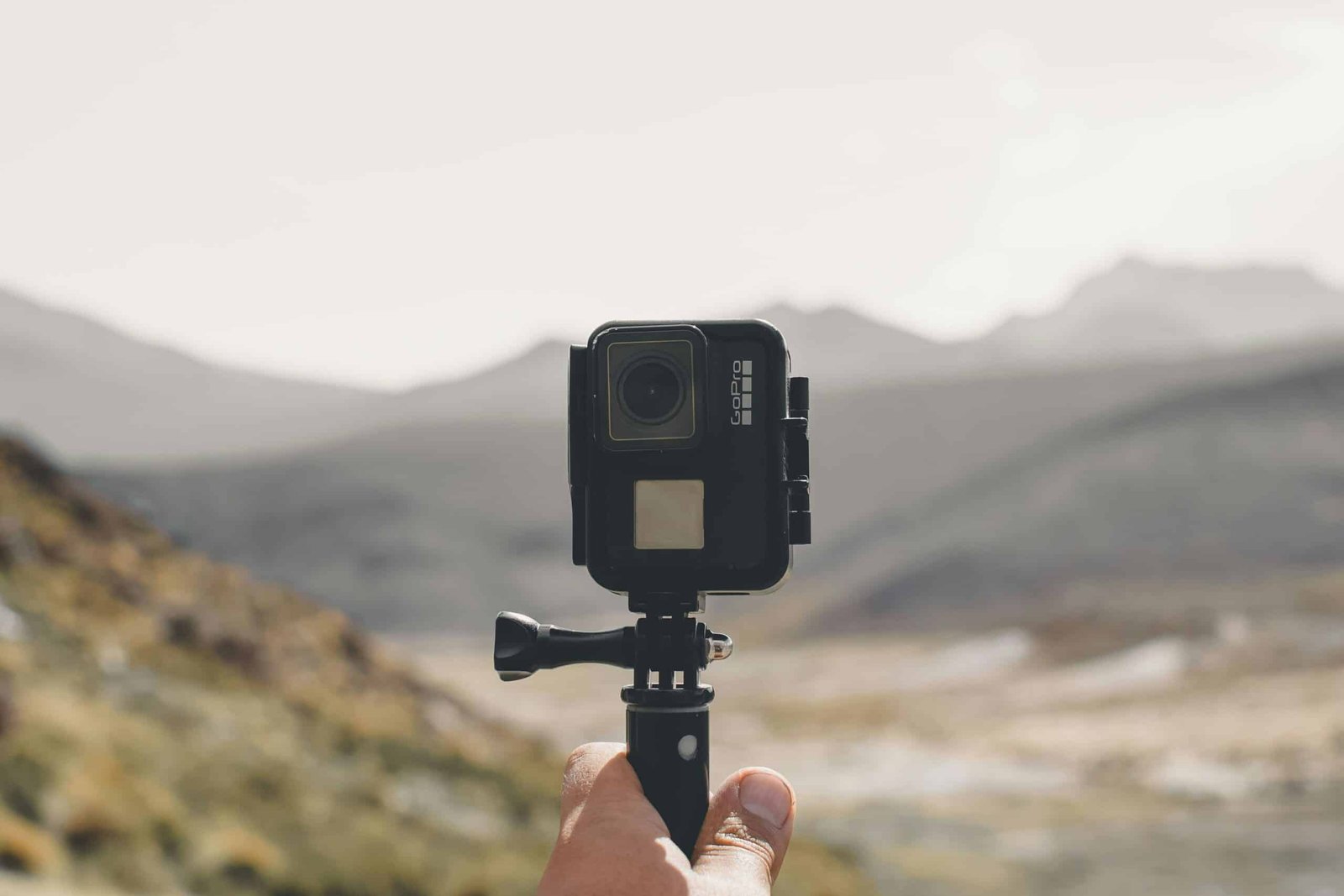
You stop on a ridge, pull out the phone, take a photo, and the moment is already different. The best action cameras for hiking and backpacking fix that by recording while you keep walking, which is the only way to capture how a trail actually felt.
The hard part is not the camera. It is the mount, the battery and the memory card, because those are what decide whether you filmed anything at all.
Plenty of people buy a camera, carry it buried in a pack and come home with nothing. A camera on a strap gets used, and hiking daypacks with sternum strap attachment points make that easy.
Quick Verdict
A current flagship action camera with strong stabilization covers everything most hikers want, and a chest harness is the mount that gets the most use. Buy two spare batteries and a video-rated card at the same time, because both are the usual reason footage stops. If weight is your main concern, a small clip-on camera weighs a fraction and still beats the phone in your pocket.
Key Takeaways
- Stabilization matters more than resolution for walking footage.
- Cold weather cuts battery life sharply, so spares are not optional.
- A slow memory card causes dropped recordings at high bitrates.
- A chest mount reads as a hiking view better than a head mount does.
- Most of these are water resistant rather than dive rated without a case.
- Filming everything means hours of footage nobody watches, including you.
How We Picked
We sorted by whether the setup survives a real day out, which means stabilization, cold tolerance and how quickly you can start recording. A camera you have to wake, unlock and configure gets left off.
Then we weighted the supporting parts, since mounts, batteries and cards account for most of the frustration in this category rather than the camera body.
We have not run these cameras through our own trips, so nothing here reflects battery life we measured. Manufacturer runtime figures assume moderate temperatures and specific settings, which a winter ridge is not.
1. A Flagship Action Camera, Best Overall
Why It Stands Out
Current top-end models smooth out walking motion well enough that handheld footage looks deliberate rather than shaky. That stabilization is the single feature that separates usable hiking video from something you delete.
They also handle the harsh light of a snow field or an open ridge far better than a phone does.
Worth Knowing
Heavy stabilization and high frame rates drain the battery quickly and warm the body up. Expect to swap packs more often than the spec sheet suggests.
Cold makes it worse, and keeping your phone alive in cold weather applies to camera batteries just the same.
This suits anyone who wants footage worth editing. Skip it if you only take stills. Best for: smooth video while you keep moving.
2. A Compact Clip-On Camera, Best for Weight
Why It Stands Out
A small magnetic or clip-mounted camera rides on a shoulder strap and weighs almost nothing, so it comes on trips a larger one would not. One button starts recording, which is what gets it used.
Being discreet also means you film people behaving normally rather than posing.
Worth Knowing
Small sensors and small batteries mean shorter clips and weaker low light performance. Stabilization is usually a step behind the flagships too.
Clip mounts also fail eventually, so check how it attaches before trusting it over a drop.
This suits ultralight trips and casual filming. Skip it for a project you care about. Best for: a camera light enough that you bring it.
3. A Chest Harness Mount, Best Viewpoint
Why It Stands Out
A chest mount sits low enough to show the trail and your poles entering the frame, which reads as walking rather than as floating. It is also stable, because your torso moves less than your head.
Hands stay free, and the camera is right there when something happens.
Worth Knowing
Pack straps and a chest harness compete for the same space, so the two need fitting together rather than separately. A loose harness sways and ruins the stability you bought it for.
Steep uphill also tips the frame down toward your boots.
This suits hiking, scrambling and biking. Skip it if you wear a heavily loaded harness pack. Best for: the view that looks like hiking.
4. A Pole and Handlebar Clamp, Best for Framing
Why It Stands Out
Clamping the camera to a trekking pole gives you a reach shot, a follow shot and a tripod substitute from gear you already carry. On a bike the same clamp turns handlebars into a mount.
It is the cheapest way to get footage that does not look like every other chest-mounted clip.
Worth Knowing
A camera on a pole means one hand occupied and a pole not doing its job. Clamps also slip on carbon shafts unless you pad them.
Pole choice affects fit, and trekking poles vary a lot in diameter.
This suits anyone who wants varied shots. Skip it if you need both poles for balance. Best for: angles a body mount cannot reach.
5. Spare Batteries and a Charger, Best Insurance
Why It Stands Out
Action camera batteries are small, and stabilization plus cold air empties them fast. Two spares and a multi-bay charger turn a camera from a morning accessory into an all-day one.
Swapping a pack also takes seconds, while charging from a power bank takes the camera out of action.
Worth Knowing
Third-party cells vary in quality and some cameras warn about them. Keep spares warm in an inside pocket rather than in the lid of the pack.
You still want a way to charge on a multi-day trip, and power banks for hiking cover that.
This suits every trip longer than a few hours. Skip nothing here. Best for: filming after lunch as well as before.
6. A Video-Rated Memory Card, Best Overlooked Part
Why It Stands Out
High bitrate video needs a card that can sustain the write speed, and a cheap one stops recording partway through a clip. A properly rated card removes a failure mode you cannot see coming.
Capacity also means you stop deleting footage in the field to make room.
Worth Knowing
Counterfeit cards are common, so buy from a seller you trust and check the card in the camera before a trip. Rated speed classes matter more than the headline number on the label.
Cards also dislike condensation, which is a real thing in a cold pack brought indoors.
This suits any camera shooting at high bitrates. Skip it only if yours came with a good one. Best for: recordings that do not stop on their own.
Action Camera Setups at a Glance
| Item | Weight | What It Solves | Priority |
|---|---|---|---|
| Flagship action camera | Moderate | Stabilization and image quality | First |
| Compact clip-on camera | Very light | Getting carried at all | Alternative |
| Chest harness | Light | Stable hands-free view | Second |
| Pole or bar clamp | Light | Shot variety | Optional |
| Spare batteries | Light | All-day runtime | Second |
| Video-rated card | Negligible | Recordings that complete | First |
How to Choose an Action Camera for Hiking
Stabilization quality above all
Walking is the hardest motion for a camera to smooth, worse than running because of the slow sway. A generation-old flagship with good stabilization beats a new budget model without it.
How fast it starts recording
Wildlife and weather do not wait for a boot sequence, so a single-press record button earns its keep. Anything needing a phone app to start will miss the moment.
Cold weather behavior
Battery capacity falls as temperature does, and touchscreens get unreliable with gloves on. Winter trips need spares kept warm and a camera you can operate by feel, which is the same problem hiking gloves create for every device.
Mount ecosystem
Cameras using the common finger-mount standard have cheap accessories everywhere, while proprietary fittings lock you in. That matters more over time than any single spec.
Audio you can live with
Wind noise ruins more hiking footage than shaky video does, and a chest-mounted camera sits right in the airflow. Models with wind reduction and a usable external microphone option save you from narrating over silence later.
A cheap foam cover helps a great deal on exposed ground. It also muffles the rustle of a pack strap, which is the other sound that spoils a clip.
An Action Camera Against Your Phone
The phone is already with you
Modern phone video is good and the camera is in your pocket, so for stills and short clips it is hard to argue with. The problem is that using it means stopping, and a phone is also your map and your emergency contact, which you would rather not drop.
An action camera takes the abuse
It mounts to things, shrugs off rain and grit, and keeps filming while your hands are busy, which is the whole point. A protective pouch covers the phone side, and waterproof phone cases and pouches cover that.
What Trips People Up
Filming constantly
Hours of continuous footage produce nothing watchable and flatten the battery by noon. Short deliberate clips at the parts that matter make a far better record.
Keeping it in the pack
A camera inside a closed pack does not get used, which is the most common way this purchase goes to waste. Mount it where your hand already goes.
Assuming it is waterproof
Most bodies resist rain and shallow splashes rather than immersion, and the door seal is the weak point once grit gets in it. A dedicated case is needed for anything beyond weather.
Forgetting it has no map
A camera is not navigation and not a safety device, however capable it looks on your chest. Handheld GPS units for hiking and satellite messengers are the gear that does those jobs.
Recommended Reading
Worth reading next: binoculars for hiking and wildlife watching, which is the other way to get closer to what you came to see.
Action Camera FAQ
What are the best action cameras for hiking and backpacking
A current flagship with strong stabilization is the right choice for anyone who wants footage worth editing, paired with a chest harness and spare batteries. If weight dominates your decisions, a small clip-on camera gets carried more often and still beats filming with a phone.
How long do the batteries last on a hike
Less than the specification suggests once stabilization is on and the air is cold, which is why spares are standard practice. Keeping the spares in an inside pocket makes a noticeable difference.
Is a chest mount or a head mount better
A chest mount is steadier and shows the trail, which reads as hiking to anyone watching. Head mounts follow your gaze but swing with every glance, so the footage is harder to use.
Do I need 4K
Not usually, since stabilization and framing matter far more than resolution for this kind of footage. Lower resolutions also fill cards more slowly and run the battery down less.
What memory card should I use
Buy a card with a sustained video speed class that meets the camera’s requirement, from a seller you trust. A card that cannot keep up stops recording in the middle of a clip with no warning.
Can I use it in the rain
Most are fine in rain and splashes as long as the door seal is clean and properly closed. Immersion, paddling and swimming need the dedicated housing instead.
How much does the whole setup weigh
A camera, a harness, two spares and a card is a modest addition to a day pack, and a clip-on setup is lighter still. The mounts and batteries add up faster than people expect, so weigh the whole kit rather than the body.
Will it replace my hiking watch
No, because a camera records footage rather than tracking a route or a heart rate. Our roundup of hiking watches covers that side of the kit.
